Generative AI is redefining the enterprise landscape, delivering a significant leap in capability and unlocking transformative potential across industries and business functions.
According to a recent KPMG survey, 77% of organizations believe generative AI will have a greater impact on their business than any other emerging technology over the next three to five years.
Organizations that adopt generative AI early are better equipped to succeed in an increasingly dynamic digital environment. Acting now is critical, and businesses that delay risk falling behind competitors that are leveraging intelligent, AI-driven solutions to automate complex workflows, enhance decision-making, and create greater value for customers.
In this blog, we break down what Gen AI for enterprise is, explore its real-world capabilities across industries, highlight its wide-ranging benefits, and examine the key challenges organizations face, along with practical ways to address them.
Understanding Enterprise Generative AI
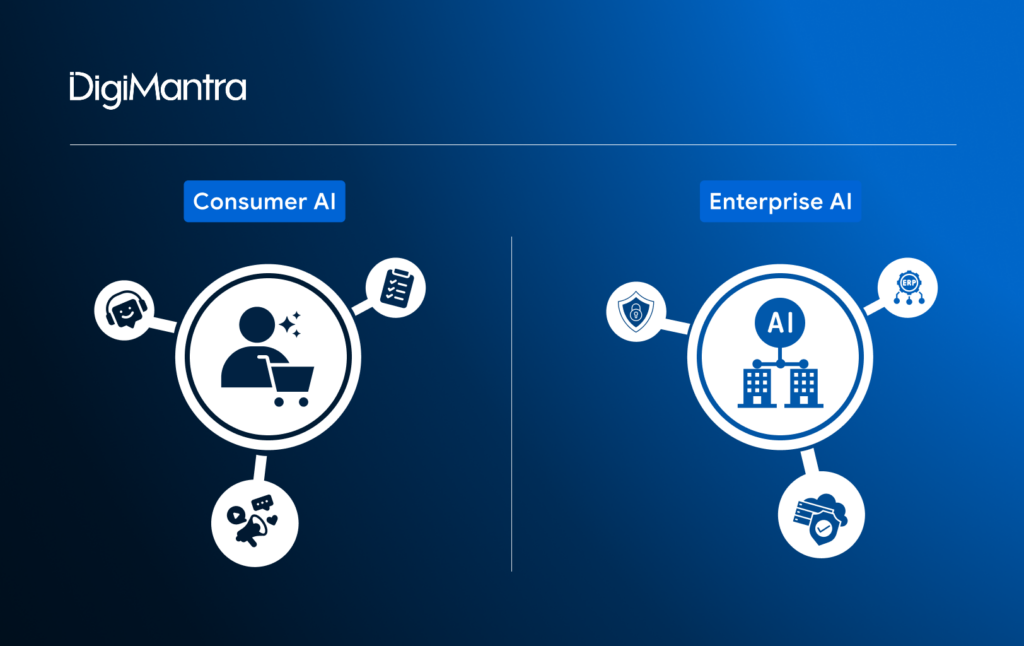
Enterprise generative AI is designed specifically to address the complex demands of large organizations. Unlike consumer-focused AI tools, it operates on vast, structured datasets and integrates seamlessly with existing enterprise IT infrastructure.
Powered by enterprise generative AI tools such as generative AI models, large language models (LLMs), and machine learning, these solutions enable businesses to create high-quality content faster, improve collaboration across teams, and tackle critical operational challenges.
Defining Generative AI in a Business Context
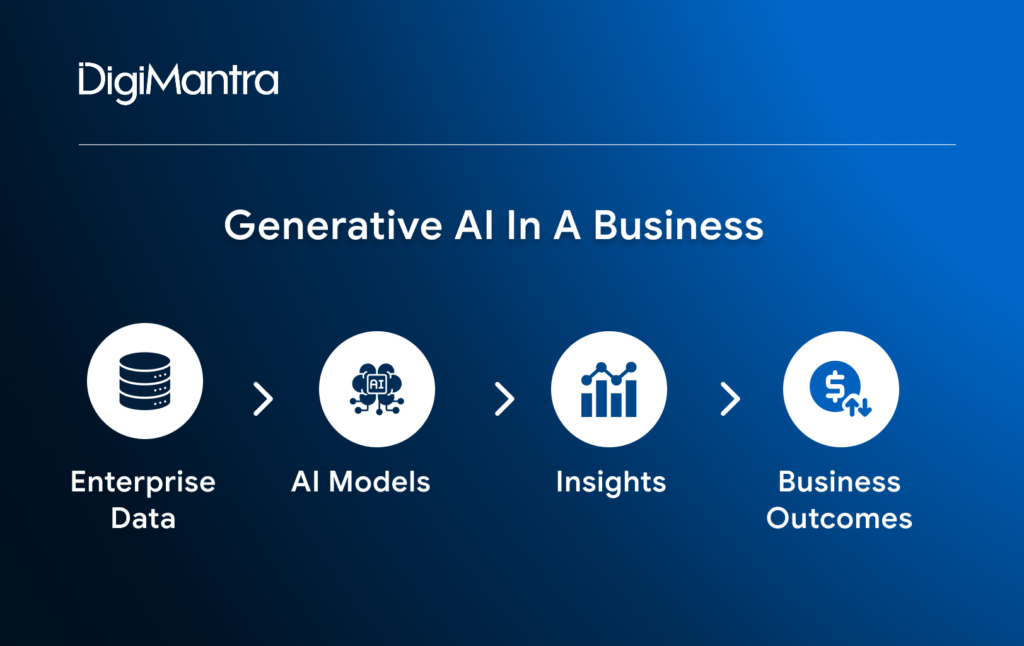
Generative AI refers to systems that can produce original content by learning from large volumes of data using advanced algorithms. In a business environment, generative AI supports organizational goals by enabling tasks such as creating tailored marketing content, generating product visuals, and accelerating creative workflows.
These models are especially valuable for organizations that require customized, on-brand content at scale. From generating detailed product descriptions for eCommerce platforms to analyzing customer behavior and recommending personalized services, generative AI adapts outputs to specific business needs.
By interpreting user preferences through artificial intelligence, companies can deliver experiences that feel highly relevant and targeted.
Beyond content creation, generative AI is a transformative force in how businesses manage, interpret, and act on information. It empowers organizations to develop stronger strategies, improve operational efficiency, and make data-driven decisions.
With applications across multiple industries, generative AI opens new opportunities for innovation and smarter ways of working.
What Enterprise Generative AI Enables
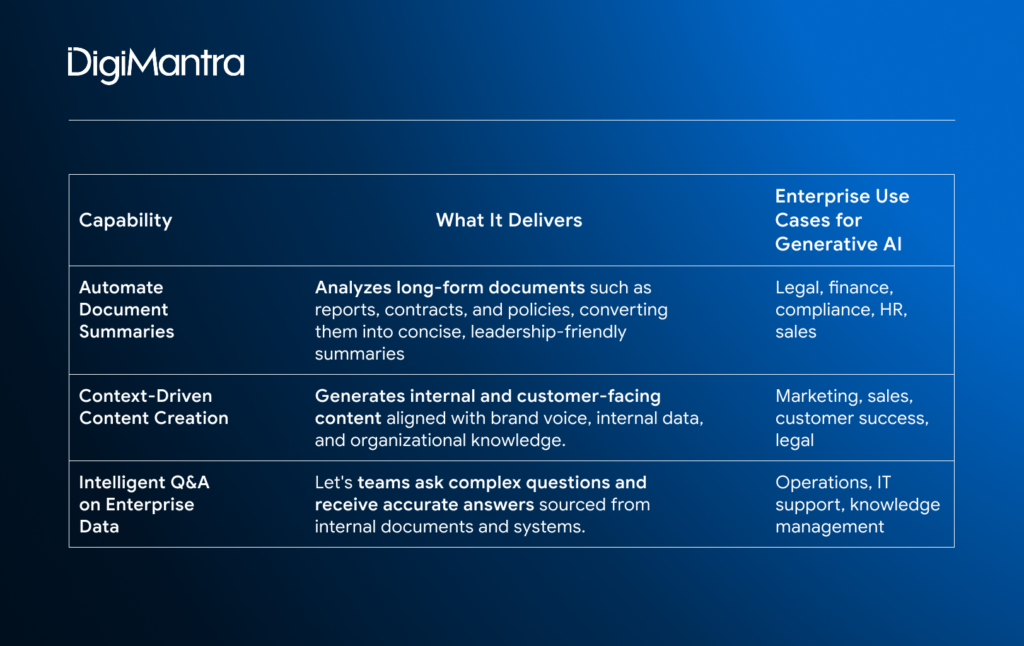
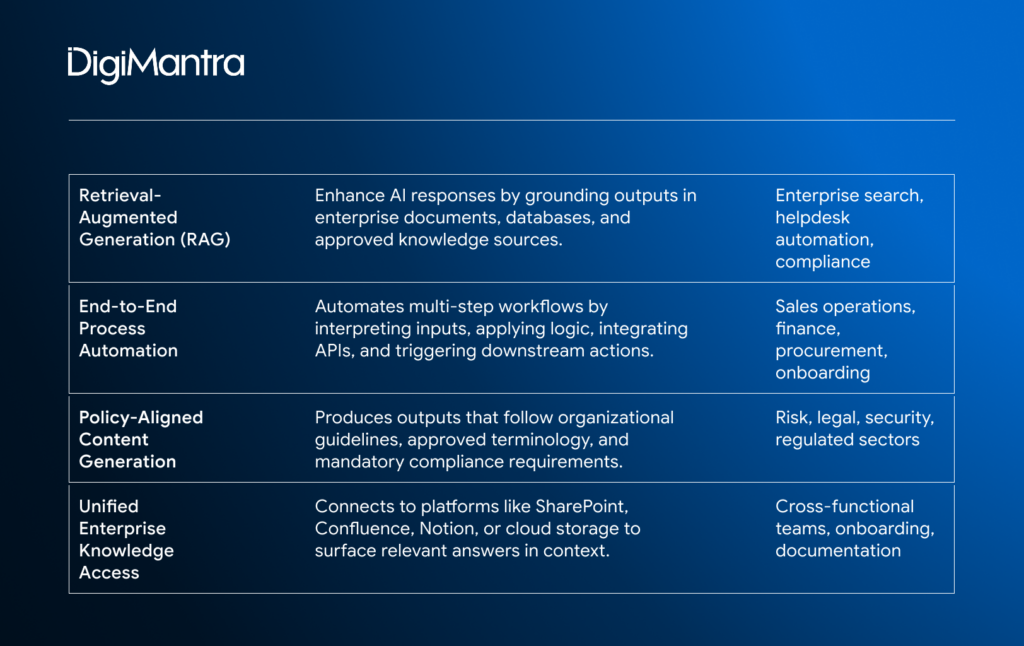
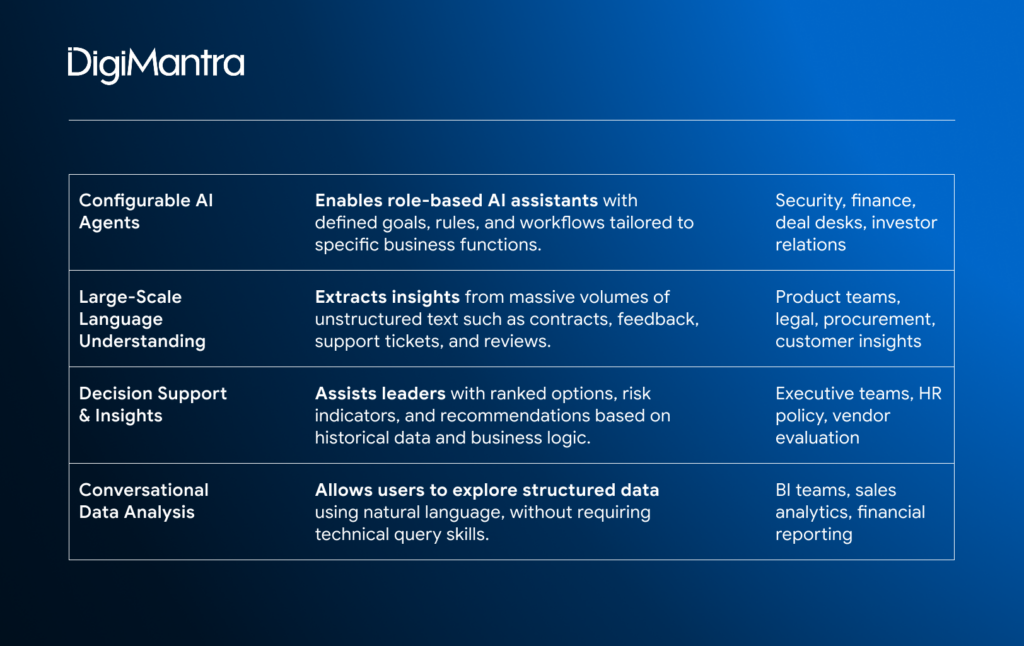
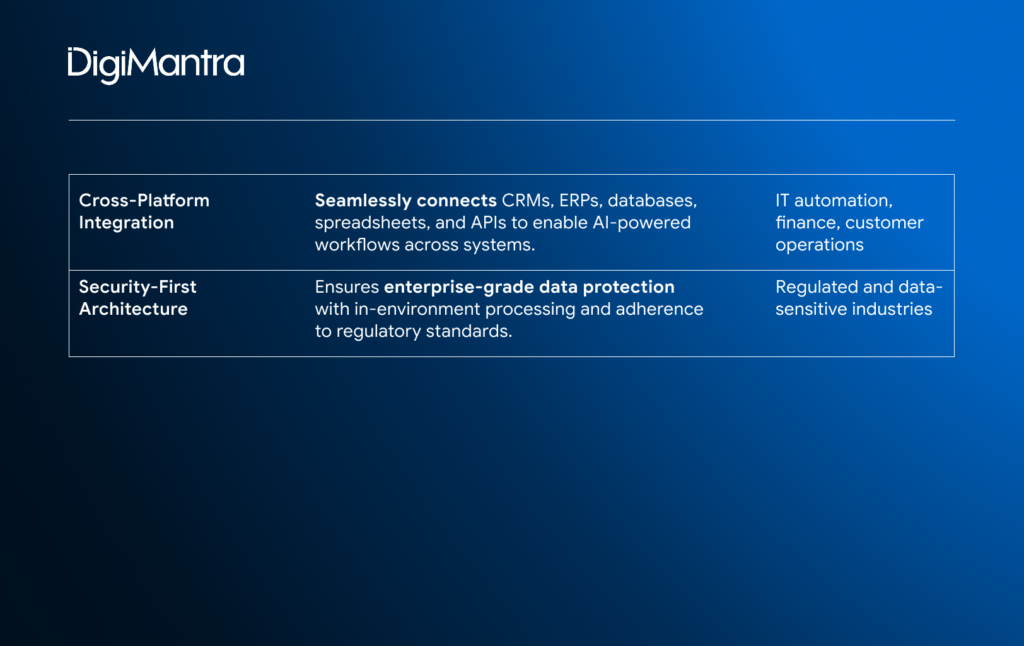
The Foundation of Generative AI in Enterprises
Core Technologies Powering Generative AI
-
Machine Learning and Deep Learning
Machine learning (ML) and deep learning (DL) form the core of generative AI systems, allowing software to learn directly from data, recognize patterns, and make informed predictions with minimal manual input.
Deep learning, a specialized branch of ML, relies on multi-layered neural networks to process complex information. This approach enables generative AI to create original outputs – such as text, images, or other media – by training on large-scale datasets.
-
Natural Language Processing and Generation
Natural language processing (NLP) allows computers to comprehend, interpret, and generate human language.
In generative AI, NLP drives the creation of written content that reflects natural language structure and context. Modern language models, including transformer-based architectures, demonstrate how AI can generate meaningful, context-aware text across a broad range of business and creative use cases.
-
Image and Video Generation Technologies
Generative AI for business also plays a key role in visual content creation through techniques such as Generative Adversarial Networks (GANs). These systems pair a content generator with an evaluator that continuously improves output quality.
As a result, enterprises can generate highly realistic images and videos, reshaping areas like digital design, gaming, simulations, and immersive experiences by producing rich visual assets efficiently and at scale.
The Generative AI Technology Stack
The generative AI for the business ecosystem is typically structured around three foundational layers that work together to deliver scalable, intelligent solutions.
-
Application Layer
The application layer represents the user-facing side of the generative AI stack, enabling seamless interaction between people and AI-powered systems. These applications embed AI capabilities directly into workflows, making advanced models practical and accessible for both businesses and end users.
From improving operational efficiency to powering creative and consumer experiences, this layer plays a key role in translating AI potential into real-world value.
This layer generally falls into two categories:
- End-to-End Applications with Proprietary Models
These solutions integrate in-house generative AI models into complete, customer-ready products. Organizations manage the entire AI lifecycle – data ingestion, model training, inference, and deployment – within a controlled environment.
While the underlying models are privately owned and not publicly accessible, their capabilities are delivered to users through software platforms or services. Well-known examples include OpenAI’s GPT and DALL·E.
- Applications Built Without Proprietary Models
These applications leverage existing generative AI frameworks rather than relying on closed, in-house models. Often developed using open-source tools such as TensorFlow, PyTorch, or Keras, they allow teams to create and customize models for specific use cases.
Platforms like RunwayML and StyleGAN illustrate how flexible, model-agnostic applications can support creative and specialized workflows.
-
Model Layer
At the heart of the enterprise generative AI platform stack is the model layer, which combines different types of AI engines to balance flexibility, performance, and domain relevance. This layered approach supports diverse business needs and use cases.
- General-Purpose AI Models
These foundational models power a wide range of generative capabilities, including text, image, and speech generation. Designed to handle multiple tasks, they adapt through learning and can be extended across industries. Their versatility makes them a strong baseline for building generative AI for enterprise solutions.
- Domain-Specific AI Models
Also known as task-focused models, these are trained on specialized datasets to excel in narrow areas such as marketing content creation, product imagery, music composition, or 3D design. Their targeted training enables higher accuracy and better outcomes within defined domains.
- Hyperlocal and Proprietary AI Models
Built using highly specific, often private datasets, these models deliver precise, customized outputs aligned with organizational requirements. Whether generating brand-consistent visuals or producing industry-specific documentation, hyperlocal models offer superior relevance and control.
-
Infrastructure Layer
The infrastructure layer provides the computing foundation required to develop, train, and deploy generative AI models. It includes high-performance hardware such as GPUs or TPUs, along with software frameworks that support model development and optimization.
Cloud platforms further enhance this layer by offering on-demand access to scalable computing power and storage, enabling organizations to build and deploy AI solutions efficiently without heavy upfront investments.
Benefits of Gen AI for Enterprises
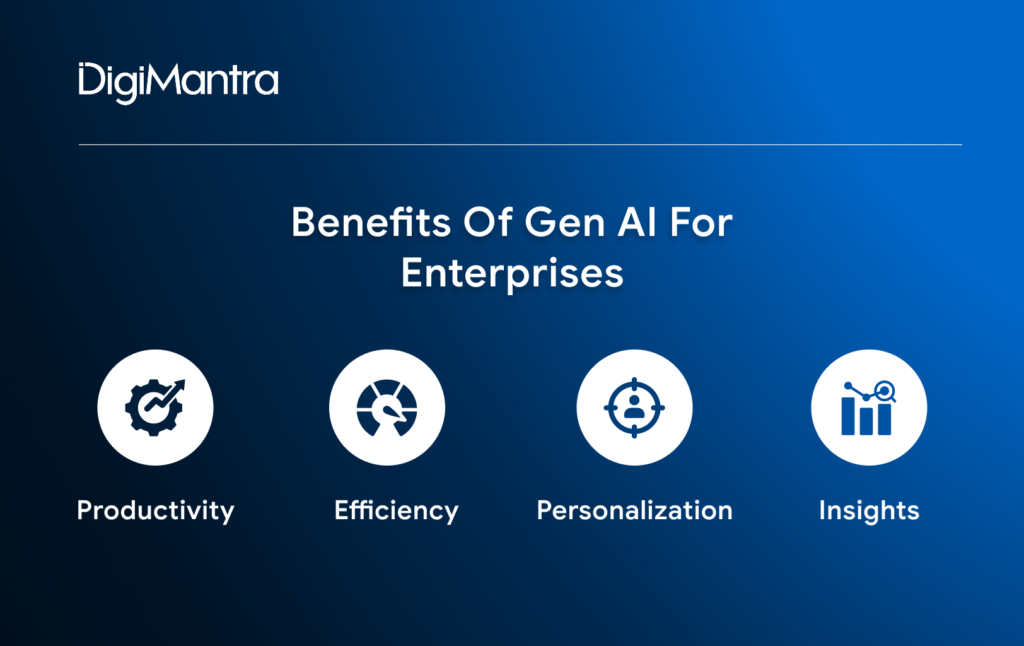
Key benefits of enterprise generative AI tools – DigiMantra
Let’s explore the key advantages enterprises can unlock by adopting enterprise generative AI tools and applications, partnering with a reliable Generative AI development company.
-
Smarter Decision-Making
Enterprises leverage generative AI to evaluate multiple scenarios, validate ideas, and forecast outcomes using historical and real-time data. By processing large datasets and uncovering patterns, AI-generated insights support strategic planning, operational optimization, and informed business decisions.
-
Higher Workforce Productivity
Generative AI reduces the burden of repetitive and manual tasks, allowing teams to focus on higher-value work. From automating data entry to generating reports, AI-driven automation streamlines daily operations, lowers costs, and boosts overall productivity across departments.
-
Operational Efficiency at Scale
By optimizing workflows and automating routine processes, generative AI helps enterprises save time and reduce operational expenses. Whether improving supply chain coordination or accelerating customer support, AI-driven efficiencies enable organizations to respond faster and operate more effectively.
-
Hyper-Personalized Experiences
Custom Generative AI for enterprise analyzes customer behavior, preferences, and interaction history to deliver highly tailored recommendations and communications. This level of personalization enhances engagement, strengthens customer relationships, and drives long-term loyalty.
-
Advanced Data Synthesis
Generative AI for enterprise excels at combining data from multiple sources, structured and unstructured, to surface meaningful insights. By identifying trends and correlations, it helps enterprises uncover new opportunities, improve forecasting accuracy, and refine business strategies.
-
Enhanced Customer Experience
AI-powered virtual agents and assistants provide contextual, human-like interactions across customer touchpoints. These intelligent responses improve service quality, resolve queries faster, and create more satisfying customer experiences.
Key Challenges in Adopting Generative AI, and How to Address Them
While generative AI offers significant value, enterprises must navigate several challenges to ensure responsible and effective adoption.
-
Challenge: Bias and Fairness
Models trained on biased data can generate skewed or discriminatory outcomes, affecting areas such as recruitment or credit decisions. Many business leaders view trust-related concerns as a major barrier to adoption.
Solution:
Organizations should prioritize diverse, representative datasets and continuously evaluate models for bias. Regular audits and bias-detection techniques help ensure fair and responsible AI outputs.
-
Challenge: Explainability and Trust
The complexity of generative AI models can make their decision-making processes difficult to interpret, reducing confidence in their outputs and limiting production deployment.
Solution:
Enterprises can adopt explainability techniques such as model visualization and interpretability tools. Clear communication around AI capabilities and limitations further builds trust among stakeholders.
-
Challenge: Data Security and Privacy
Custom Generative AI for enterprises often relies on sensitive enterprise data, increasing the risk of breaches, compliance violations, and reputational damage if not properly managed.
Solution:
Strong security measures – including encryption, access controls, and governance frameworks – are essential. Clear policies on data usage and compliance ensure sensitive information remains protected.
-
Challenge: Ethical and Social Risks
Without safeguards, generative AI may produce inappropriate, misleading, or harmful content.
Solution:
Establishing clear ethical AI guidelines helps define acceptable use, covering fairness, privacy, and safety. Ongoing employee training ensures responsible AI adoption across the organization.
-
Challenge: Technical Complexity
Training and deploying generative AI models can be resource-intensive, requiring specialized skills and infrastructure.
Solution:
Partnering with experienced AI providers or consultants for enterprise generative AI development services can accelerate implementation. At the same time, investing in employee upskilling helps build internal expertise to manage AI systems effectively.
Best Strategies for Implementing Generative AI in Enterprises
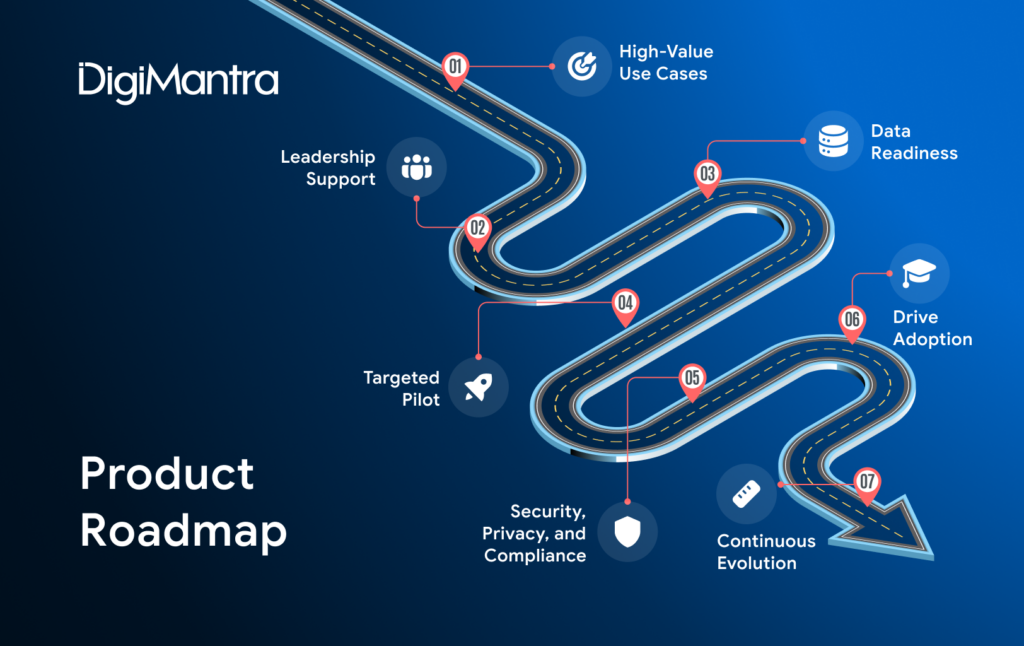
Enterprise generative AI implementation best practices – DigiMantra
Implementing generative AI at an enterprise scale requires more than selecting the right technology. It demands thoughtful planning, reliable data foundations, strong governance, close collaboration between technical and business teams, and the guidance of the right generative AI development company.
The following best practices can help technology leaders translate generative AI investments into measurable business outcomes.
-
Focus on High-Value Use Cases
Begin with processes that are repetitive, data-intensive, and constrained by manual effort. Ideal starting points often include compliance documentation, financial analysis, customer support workflows, and proposal or report creation. Prioritize activities that require synthesizing information from multiple sources.
Collaborate with business leaders to identify operational pain points and select use cases with clear impact and a realistic pilot scope. The goal is to improve efficiency or quality without disrupting core systems.
-
Secure Leadership Support and Build Cross-Functional Teams
Executive sponsorship is critical for driving adoption and securing resources. Align AI initiatives with leadership objectives such as productivity improvement, cost optimization, or competitive differentiation.
Once aligned, assemble a multidisciplinary team that includes IT specialists, business subject-matter experts, and functional owners. Engage legal, compliance, or risk teams early when relevant to ensure solutions meet regulatory and operational requirements.
-
Strengthen Data Readiness and System Integration
Generative AI for enterprise depends on access to accurate, relevant context. Identify where critical enterprise knowledge resides – such as document repositories, CRM platforms, or data warehouses – and ensure it is accessible in a secure manner.
Adopt AI architectures that support real-time retrieval from trusted sources. Clean, well-governed data with appropriate access controls is essential for producing reliable and compliant outputs.
-
Launch with a Targeted Pilot
Start with a focused, functional pilot that addresses a single business problem. Examples include generating first-draft compliance responses or assisting service teams with common customer inquiries.
Use prebuilt workflows or templates to accelerate development. Deploy the solution to a small group, gather feedback, and refine prompts, data sources, and workflows before broader rollout.
-
Embed Security, Privacy, and Compliance from Day One
Enterprise AI deployments must adhere to internal security policies and external regulations. Involve security and governance teams early to define safeguards.
Implement measures such as private model deployments, role-based access controls, audit logs, and data protection mechanisms. These practices help build trust and prevent adoption barriers later in the rollout.
-
Enable Users and Drive Adoption
The value of generative AI depends on effective usage. Train employees on how to interact with AI tools, structure effective prompts, and validate generated outputs. Tailor training sessions to different roles through demos and hands-on workshops.
Equally important is preparing IT and operations teams to maintain and enhance the solution. Identify internal AI champions who can support teams, resolve early challenges, and promote best practices.
-
Govern, Measure, and Evolve Continuously
Generative AI for enterprise systems require ongoing oversight. Monitor performance indicators such as usage rates, accuracy, and productivity gains. Enable feedback mechanisms so users can report issues or suggest improvements.
Define governance processes for prompt management, model updates, and deployment changes. With strong monitoring and version control in place, organizations can confidently scale from initial pilots to broader enterprise adoption.
Future Outlook of Generative AI
Generative AI is already reshaping enterprise operations, from content creation and insight generation to compliance automation and decision support. Organizations that adopt it gain a clear advantage in speed, efficiency, and innovation.
Going forward, AI will be embedded across departments as role-specific assistants that understand workflows and business context. As models mature, AI agents will increasingly surface insights proactively and support strategic decisions.
Responsible governance will be essential to scale AI safely. Strong focus on ethics, transparency, and risk management will help enterprises build trust while expanding adoption.
With the right strategy and guidance of a generative AI development company, generative AI for enterprise enables smarter work, faster innovation, and better use of human talent. Start small, build on early wins, and scale with confidence to drive long-term transformation.
Connect with DigiMantra specialists to gain deeper insights and build a customized enterprise platform tailored to your business.

AI-FIRST ENGINEERING FOR MODERN BUSINESSES
Designed for performance. Powered by innovation.
 Product Development
- Custom Software
 Mobile & Web
- AI & Automation
- Cloud Management
- Intelligent Systems