

The Apple App Store remains the leader in mobile app earnings, consistently outperforming the Google Play Store. In the second quarter of 2024 alone, it brought in nearly $25 billion from in-app purchases, subscriptions, and one-time transactions, as per Statista reports. Regionally, the U.S. took the top spot, with users spending around $6.5 billion during the first half of the year. China followed with $4.6 billion, and Japan ranked third with $1.73 billion in spending.
These numbers highlight a clear reality: businesses aiming to succeed in the mobile ecosystem can’t ignore iOS. Staying updated with the latest iOS app development trends is essential to remain competitive in this high-value market. In this blog, we’ll dive into the key innovations shaping the future of iOS apps and how they can help you create more impactful, intelligent, and user-friendly solutions.
Top iOS App Development Trends
1. Swift 6: Powering the Next Era of iOS Development
=
With the release of Swift 6 and Xcode 16 in September 2024, Apple once again showed its commitment to pushing the boundaries of app innovation and enhancing user experiences. What started as a replacement for Objective-C has now matured into the backbone of iOS app development. Swift is widely recognized for being fast, intuitive, and developer-friendly, making it the go-to choice for building modern iOS applications.
Apple’s vision with Swift 6 is clear: create a language that’s not only faster and safer but also more adaptable across platforms. This positions iOS app developers to deliver apps that are future-ready and aligned with Apple’s growing ecosystem.
Key Advancements in Swift 6
- Smarter Concurrency: Swift 6 introduces enhanced concurrency capabilities, allowing apps to handle multiple tasks seamlessly. This means fewer performance bottlenecks, smoother multitasking, and faster overall app responsiveness.
- Improved Safety: By identifying coding errors earlier in the development cycle, Swift 6 makes it easier for teams to build stable, secure, and reliable applications, which is something every iOS app development company values.
- Expanding Beyond iPhone Apps: Swift 6 isn’t just about iPhones anymore. With stronger support for Apple Watch, macOS, and even server-side development, the language is opening exciting opportunities for creating apps across the entire Apple ecosystem. For businesses planning to create an iOS app, this means greater flexibility and performance across multiple devices.

2. AI & Machine Learning: Transforming iOS App Development
Artificial Intelligence (AI) and Machine Learning (ML) are no longer just buzzwords; they’re fundamentally reshaping the way iOS app development works. Modern apps aren’t just functional anymore; they’re becoming smart, responsive, and deeply personalized.
Apple has been leading the charge with tools like Core ML, Create ML, and the Natural Language API, giving iOS app developers the ability to design applications that deliver automation, predictive insights, and smoother user experiences. What once required complex integrations is now more streamlined, enabling developers to run machine learning models directly within apps. The result? Faster performance, stronger privacy protections, and reduced latency for end users.
As we head into 2025, the influence of AI on iOS apps will only intensify, making apps more intuitive, engaging, and indispensable in everyday life.
Key Shifts to Watch
- Predictive & Personalized Experiences: AI-driven apps are learning from user behavior to recommend content, customize interfaces, and deliver tailored experiences, helping businesses keep users engaged longer.
- AI-Powered Assistants & Chatbots: From voice assistants to intelligent chatbots, companies are embedding conversational AI into their apps to simplify user interactions, automate responses, and provide real-time support.
- Advancements in Voice Recognition & NLP: With Siri and Apple’s NLP frameworks improving, apps are becoming better at understanding and executing voice commands, offering users a more natural and hands-free way to interact with technology.
3. Immersive AR and MR Experiences: Redefining Digital Experiences
When it comes to immersive technologies like Augmented Reality (AR) and Mixed Reality (MR), Apple continues to set the standard. With ARKit, iOS devices have transformed into powerful platforms capable of delivering experiences that blur the line between the physical and digital worlds. And with the launch of Apple Vision Pro, Apple is pushing spatial computing into the mainstream, opening doors to entirely new possibilities for apps.
For businesses and iOS app developers, this means AR and MR are no longer optional; they’re becoming essential for staying competitive. These technologies are reshaping industries by making digital interactions more engaging, interactive, and profitable, whether in gaming, e-commerce, healthcare, education, or real estate.
Key Trends to Watch
- Virtual Try-Ons and 3D Shopping Experiences: Online shopping is no longer just scrolling and clicking. With AR-powered iOS apps, customers can try on clothes, accessories, and makeup virtually using real-time face and body tracking. They can even see how furniture or décor would look inside their homes through 3D object placement. This not only builds buyer confidence but also reduces returns and boosts conversions.
- Mixed Reality with Apple Vision Pro: The Apple Vision Pro is ushering in a new era where digital elements seamlessly integrate with the real world. Developers are now building apps that merge physical and virtual environments, creating more immersive, interactive, and practical experiences for users.
- AR-Driven Gaming: Apple’s ARKit 6 has significantly advanced mobile gaming with better motion tracking and AI-powered characters that react dynamically to their surroundings. Developers are also experimenting with multiplayer AR games that use real-world objects, making gameplay more interactive and social.
- 5G, Cloud, and AR Convergence: With the rise of 5G and cloud computing, AR-powered iOS apps are becoming faster, more responsive, and more scalable. Ultra-low latency enables uninterrupted AR experiences, whether it’s real-time navigation, immersive gaming, or HD virtual shopping. Together, these technologies are revolutionizing how users engage with mobile apps.

4. Wearables and IoT: Driving the Future of Connected Experiences
The Apple Watch has completely redefined how people monitor their health and wellness. From sleep tracking and ECG monitoring to AI-powered workout suggestions, Apple’s ecosystem is making healthcare more personalized and proactive. This growing demand for smarter health solutions has pushed iOS app developers to design apps that leverage AI and IoT for preventative care and improved user well-being.
But the future of wearables and IoT extends far beyond fitness. With Apple’s expanding ecosystem, iOS app development services are unlocking powerful opportunities in smart homes, workplace automation, and everyday productivity.
Key Trends to Watch
- Smart Homes Powered by iOS Apps: Apple’s HomeKit is reshaping home automation by letting users control lights, thermostats, appliances, and security systems directly from their iPhones. Integration with Siri makes voice-based commands seamless, while IoT-driven predictive maintenance is increasing efficiency not just in homes but across industries like manufacturing and energy.
- Apple Watch & iPhone App Synergy: The Apple Watch keeps on evolving from an assistant gadget to an autonomous platform. Many apps now run independently on the Watch, delivering real-time alerts, productivity tools, and health insights without relying on the iPhone. Features like gesture-based controls and AI personalization are elevating the wearable experience, making interactions smoother and more intuitive.
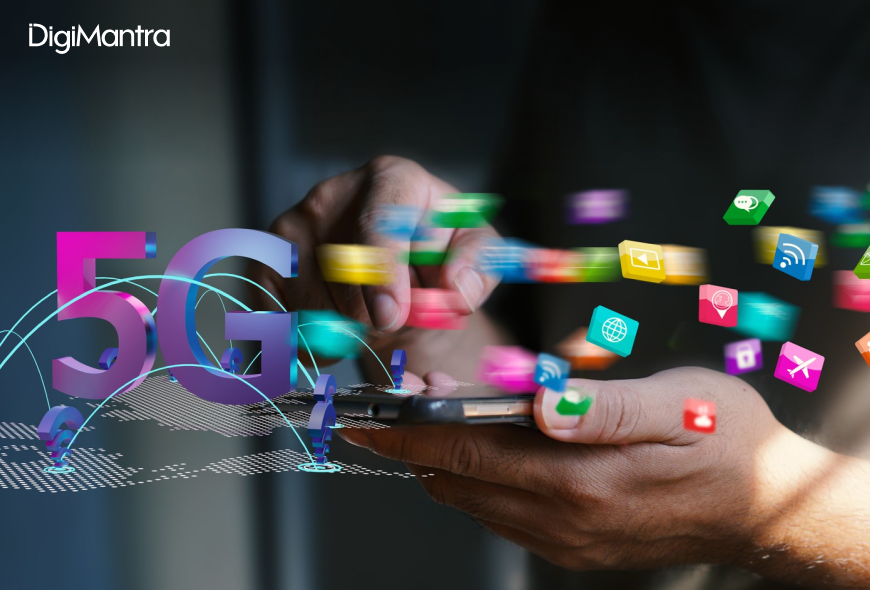
5. 5G-Optimized Apps: Powering the Next Level of iOS Experiences
As 5G adoption accelerates globally, iOS app developers are rethinking how apps are built to take advantage of its ultra-fast speeds, near-zero latency, and massive bandwidth. For users, this means robust, highly interactive experiences. For businesses, it opens up new opportunities to deliver apps that feel instantaneous, immersive, and highly connected.
Key Trends to Watch
- Faster Streaming & Real-Time Data Processing: With 5G, apps that rely on streaming, whether it’s video, cloud gaming, or live conferencing, are enjoying massive upgrades. Real-time content delivery means smoother playback, seamless AI-powered recommendations, and interactive AR/VR live streaming, all without lag.
- Low-Latency Cloud Computing: Thanks to 5G’s speed, apps can now offload heavy workloads to cloud-based AI processors. This not only improves functionality but also preserves device battery life. Multiplayer games are also benefiting, with ultra-responsive gameplay and minimal lag making real-time interaction smoother than ever.
- AR & VR Innovation on the Go: Augmented Reality shopping and mobile VR are becoming far more engaging. Imagine real-time interaction with high-quality 3D product models while shopping online. With 5G, AR apps are improving in recognition, rendering, and responsiveness, leading to more interactive and realistic experiences for users.
6. VisionOS: Redefining Digital Interaction with Spatial Computing
 
Apple’s Vision Pro and its dedicated VisionOS platform are paving the way for a new era of spatial computing, where digital content feels seamlessly integrated into the physical world. For iOS app developers, this marks the beginning of a paradigm shift, one where apps are no longer confined to screens but become immersive environments users can interact with naturally.
Key Trends to Watch
- Natural, Intuitive Interactions: VisionOS introduces a fresh method to interact with digital content. By combining voice commands, hand gestures, and eye tracking, apps can now offer interactions that feel instinctive and fluid, creating a sense of presence and immersion like never before.
- Immersive 3D App Experiences: With high-resolution spatial displays, apps built for VisionOS deliver lifelike, three-dimensional environments. Navigation relies on intuitive, touchless gestures, making movement within apps seamless and highly engaging. This opens up endless opportunities across industries, from entertainment and education to real estate and healthcare, where realistic 3D interactions elevate user experiences to a whole new level.
7. Privacy & Security Enhancements: Building User Trust in iOS Apps
Apple has always been at the forefront of data security and privacy, and its latest updates make it clear that protecting users remains a top priority. For any iOS app development company, staying ahead of these evolving standards isn’t optional; it’s essential for building user trust and long-term app success.
Key Trends to Watch
- App Tracking Transparency (ATT): With ATT, apps must now request explicit prior consent for monitoring users across digital platforms. This shift is reshaping advertising strategies, nudging businesses toward a privacy-first approach while giving users full control over their personal data.
- Advanced Biometric Authentication: Apple continues to refine Face ID and Touch ID with speedier, highly accurate detection. Moving toward password-less authentication, iOS apps are offering smoother logins without compromising security, making both convenience and protection a win for users.
- End-to-End Data Encryption: Apple is extending end-to-end encryption across iCloud, Messages, and even third-party applications. For iOS developers, this means stricter compliance requirements but also a chance to reassure users that their sensitive data is fully protected.

8. Sustainability & Energy Efficiency: Building Greener iOS Apps
Apple’s commitment to sustainability is shaping the way iOS app developers approach design and development. From energy-efficient coding to smarter resource management, the focus is now on creating apps that are not only high-performing but also environmentally responsible.
Key Trends to Watch
- Energy-Efficient Coding for Better Battery Life: Optimizing background tasks and reducing unnecessary processing allows apps to run smoothly while consuming less power. This ensures a seamless user experience without draining device batteries.
- Smart Resource Management & Lean Development: Developers are adopting lean coding practices to minimize CPU and memory usage, which in turn lowers the carbon footprint of iOS apps. Efficient resource management is becoming a core principle in modern app development.
- Apple’s Green Guidelines: Apple encourages coders to optimize workflows, restrict storage, and leverage cloud solutions to minimize ecological impact. Businesses that prioritize sustainability can not only contribute to the global green movement but also enhance their brand reputation among eco-conscious users.
Conclusion
By 2025, iOS app development will be all about innovation, creativity, and leveraging cutting-edge technologies. From Swift 6 and AI integration to AR/MR experiences, wearable connectivity, 5G optimization, and enhanced privacy features, the landscape is evolving rapidly. Businesses need to stay ahead of these trends, understand their impact on app performance and development costs, and collaborate with skilled iOS app developers to create applications that are not only innovative but also secure and user-friendly.
DigiMantra has earned a strong reputation as a leading iOS app development company, crafting custom apps tailored to the unique needs of every business. Our digital transformation company is dedicated to providing innovative mobile experiences that seamlessly integrate the latest technologies. If you’re ready to build an iOS app that stands out in a competitive market, reach out to DigiMantra to explore expert iOS app development services and consulting solutions.

AI-FIRST ENGINEERING FOR MODERN BUSINESSES
Designed for performance. Powered by innovation.
 Product Development
- Custom Software
 Mobile & Web
- AI & Automation
- Cloud Management
- Intelligent Systems