



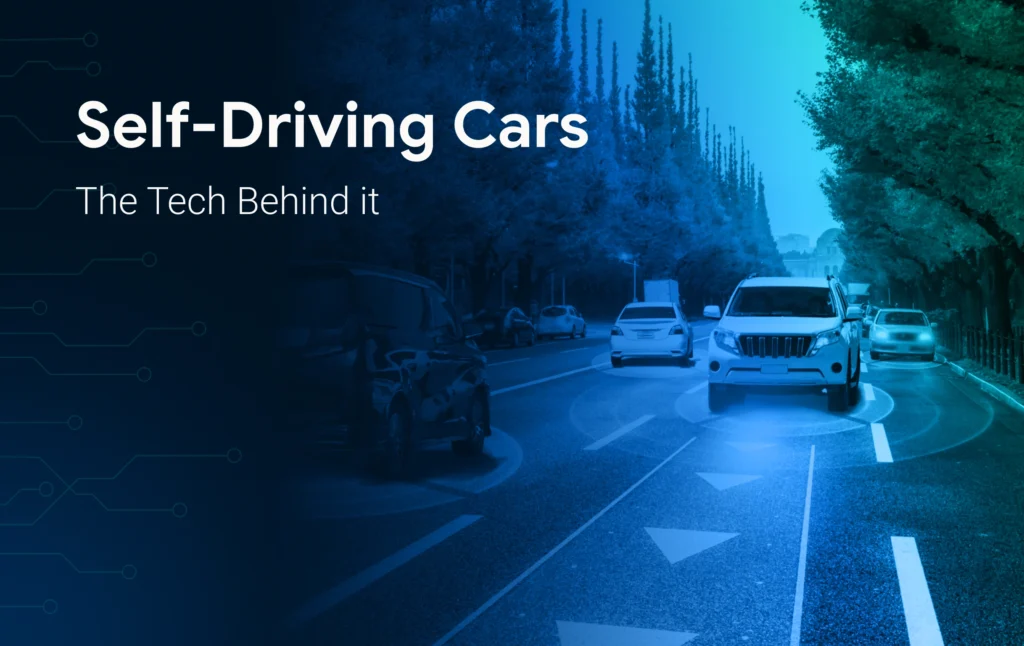
We are approaching a future where autonomous vehicles (AVs) become a common sight on our roads. German automaker BMW was on track to deliver a self-driving car by 2026, highlighting the rapid progress in this field. However, companies remain cautious about deploying these vehicles if there’s any risk they aren’t fully ready. Continued advancements and widespread adoption will require extensive collaboration across the automotive and technology industries. Partnering with an experienced digital transformation company can help businesses navigate these innovations and contribute effectively to the evolving AV ecosystem.
In 2018, Ford-owned AI startup Argo invested $15 million into creating a research centre at Carnegie Mellon University that will focus on improving self-driving technology. In 2015, Toyota invested an astounding $1 billion, for the next five years, in the Toyota Research Institute to develop robotics and AI technology for autonomous cars. In 2016, Renault-Nissan partnered with Microsoft to help advance its autonomous vehicle efforts. These are just one of the many examples of how the biggest automotive manufacturers are exploring the self-driving segment to revolutionize how we travel.
In the past five years, autonomous driving has gone from “maybe possible” to “definitely possible” to “inevitable” to “now commercially available.” One account suggests that driverless tech will add $7 trillion to the global economy and save hundreds of thousands of lives in the next few decades. Several critical technologies come into play here. All these technologies must integrate seamlessly to help ensure safe and successful autonomous-vehicle operations. Ensuring the continued acceptance of these vehicles, however, will depend on resolving lingering challenges, including public perception and expectations.
Artificial Intelligence
AI is being used in new and innovative ways in autonomous vehicle development. Deep learning is the most significant technology behind autonomous-driving AI. Deep learning, which mimics neuron activity, supports voice and speech recognition, image recognition, processing and motion detection. This tech can augment traffic recognition and adherence to mapped-out routes.
Safety and security
An autonomous vehicle will not gain prominence if the passenger riding it doesn’t feel safe. A mathematical model created by Intel aims to ensure that autonomous vehicles (AVs) are operated in a safe manner. The Responsibility-Sensitive Safety model provides specific and measurable parameters for the human concepts of responsibility and caution.
With safety comes the security model for self-driving cars. The potential for hacking a self-driving is another key concern. The market is consistently responding to the need of heightened security technologies. A report indicates that the automotive cybersecurity market will grow to $5.77 billion by 2025.
Network infrastructure
Autonomous-vehicle technology resides largely onboard the vehicle itself but requires sufficient network infrastructure. Rapid connectivity between AVs and outside source ensures that signals get to and from the vehicles more quickly. Cloud infrastructure plays a pivotal role here. The emergence of 5G technology is expected to improve connectivity to these vehicles.
Sensor technology
Sensor systems are rapidly evolving to meet the demands of expanded autonomous-vehicle operations.Radar sensors can supplement camera vision in times of low visibility, like night driving, and improve detection for self-driving cars. Likewise, Lidar makes it possible for self-driving cars to have a 3D view of their environment. It provides shape and depth to surrounding cars and pedestrians as well as the road geography.
So where are the self-driving cars?
Despite extraordinary efforts from leading names in the automotive industry, fully autonomous cars are still out of reach for the general population. While the technology that goes into building AVs have been mapped out, the process of making it fool-proof is still patchy. Lots of data is needed for AVs to track the objects around the car. It then has to form expectations about how other objects might move. The AI system in place still has not been able to tackle these complexities.

AI-FIRST ENGINEERING FOR MODERN BUSINESSES
Designed for performance. Powered by innovation.
 Product Development
- Custom Software
 Mobile & Web
- AI & Automation
- Cloud Management
- Intelligent Systems