
Key Takeaways
- Predictive analytics enables marketers to shift from reactive decision-making to proactive, insight-driven strategies.
- Advanced algorithms combined with past data reveal patterns and help forecast future outcomes with strong accuracy.
- More precise audience targeting and smarter campaign planning become possible through data-backed insights.
- Customer lifetime value can be maximised by identifying high-potential segments and optimising engagement efforts.
- Churn prediction in marketing allows businesses to take timely actions to retain valuable customers.
Take a deep breath! This isn’t a crisis, it’s an opportunity waiting to unfold. The truth is, most of your competitors still haven’t tapped into the real power of predictive analytics in marketing… at least not yet.
But here’s the catch: the predictive analytics market is surging at a remarkable 23.2% year-over-year growth rate, and businesses already using it are making sharper decisions, unlocking deeper customer insights, and driving stronger revenue. Which means it’s only a matter of time before the rest of the market wakes up.
So, if you’d rather lead the race than chase it, you’re in the right place. Pour yourself a cup of coffee, get comfortable, and let’s dive into predictive marketing analytics, where data stops being numbers and starts becoming your ultimate competitive edge.
What is Predictive Analytics?
Predictive analytics is an advanced form of data analysis that uses statistical methods, data mining, and machine learning to study past data and anticipate future outcomes. Instead of simply explaining what has already happened, it focuses on uncovering patterns, trends, and signals that help answer a far more valuable question: what is likely to happen next?
At its core, predictive analytics in marketing gathers insights from existing datasets, identifies hidden relationships, and transforms them into forward-looking forecasts. This shift, from hindsight to foresight, is what makes it such a powerful decision-making tool for modern businesses.
“Predictive thinking has long been part of marketing, and I began integrating it into our strategies years ago, when decisions were guided largely by instinct and limited data. What has changed today is precision. With AI and advanced analytics, prediction has evolved from educated guesswork to intelligent certainty. In the Gen-Z marketing era, data no longer just explains what happened; it quietly shapes what should happen next. This is where growth becomes intentional, not accidental,” says Poonam Senwal, Digital Marketing Manager at DigiMantra.
Key Components of Predictive Analytics
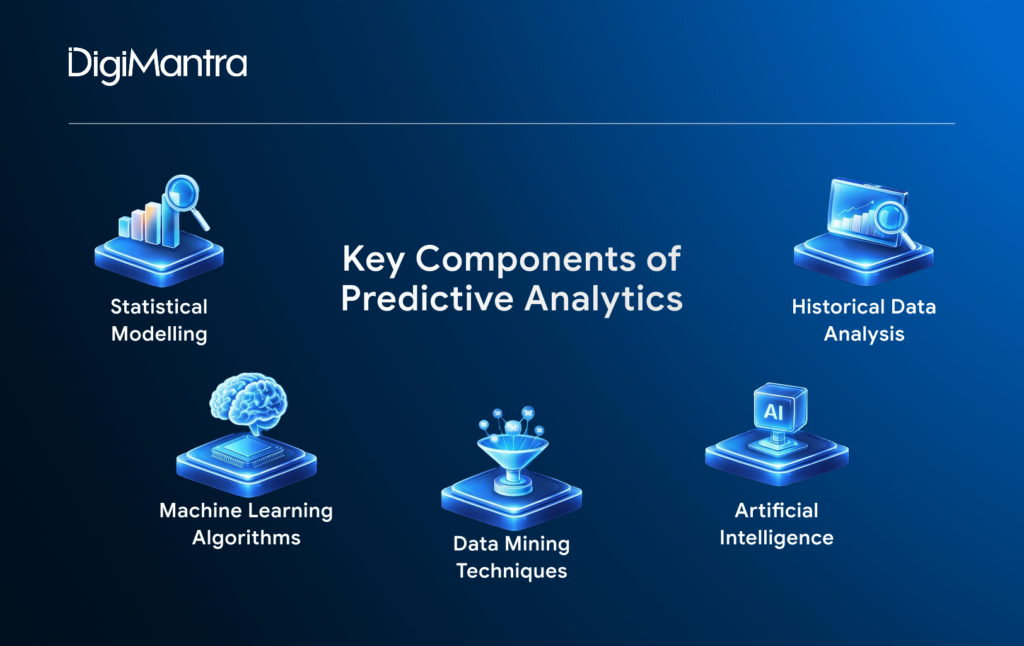
Several technologies and processes work together to make accurate predictions possible:
- Statistical modelling to identify relationships and probability patterns.
- Machine learning algorithms that continuously improve prediction accuracy.
- Data mining techniques to uncover hidden trends within large datasets.
- Artificial intelligence to automate and enhance analytical capabilities.
- Historical data analysis to understand past behaviours and outcomes.
When combined, these elements enable organisations to forecast future events based on past performance patterns and customer insights. This helps businesses simulate “what-if” scenarios, reduce uncertainty, and spot upcoming opportunities with impressive precision.
Why It Matters in Marketing
The true power of predictive analytics in marketing emerges when insights turn into action. Instead of relying on guesswork or trial-and-error marketing strategies, businesses can make informed, data-backed decisions before launching campaigns.
In simple terms, predictive analytics replaces the “try and see” approach with a smarter one: predict, plan, and perform with confidence.
“The real shift in marketing isn’t just smarter tools; it’s smarter timing. When machines recognise patterns faster than humans, brands move from reacting to customer behaviour to anticipating it, engaging even before a decision is made,” adds Poonam Senwal.
How Does Predictive Analytics Work?
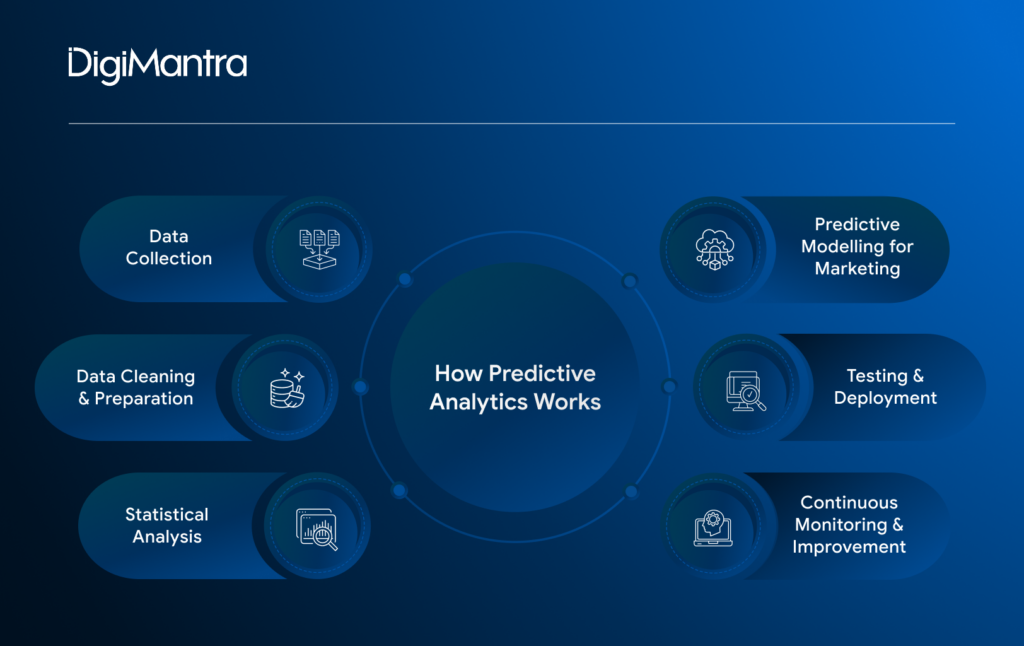
Think of predictive analytics as a smart forecasting engine for your marketing: one powered not by guesswork, but by real data and intelligent algorithms. It follows a structured process that transforms raw information into future-ready insights. Here’s how it typically works:
1. Data Collection
The process begins by gathering relevant information from multiple sources, such as CRM platforms, website analytics, social media activity, transaction histories, and customer feedback. This combined data becomes the foundation for meaningful insights.
2. Data Cleaning & Preparation
Raw datasets frequently include inaccuracies, repeated entries, or incomplete information. In this stage, the system filters out inconsistencies and organises the information into a structured format that can be accurately analysed.
3. Statistical Analysis
Next, advanced techniques are applied to uncover patterns, relationships, and trends hidden within the data. This step helps identify what factors influence customer actions and business outcomes.
4. Predictive Modelling for Marketing
Using these insights, algorithms build models that estimate future possibilities. These models can forecast customer behaviour, campaign performance, and emerging market trends, helping marketers plan data-driven marketing strategies with confidence.
5. Testing & Deployment
Before being used in real campaigns, the model is validated by comparing predictions with known results. This ensures reliability and strengthens trust in the insights generated.
6. Continuous Monitoring & Improvement
Predictive models aren’t static. They are constantly monitored and refined as new data flows in, allowing accuracy and performance to improve over time.
What truly sets predictive analytics in marketing apart is its ability to evolve. With every new data point, it becomes smarter, enabling brands to anticipate changes, act faster, and stay consistently ahead of competitors.
Predictive Analytics vs. Machine Learning
These two terms often get mixed up, but they aren’t identical. A simple way to understand them is to think of predictive analytics as the goal, anticipating future outcomes, while machine learning is one of the key tools that helps achieve that goal. They work closely together, but each serves a distinct purpose.
Predictive analytics focuses on using data to estimate future outcomes. It aims to answer forward-looking questions like what is likely to happen next and what actions we should take now.
Machine learning, on the other hand, is one of the key technologies that makes predictive analytics possible. It enables systems to learn from data patterns automatically, improving their accuracy over time without needing constant human intervention.
Here’s how they differ:
|
Predictive Analytics |
Machine Learning |
| Focuses on forecasting specific future outcomes. | Enables systems to learn from data automatically. |
| Uses a combination of statistics, data mining, and algorithms. | Relies on algorithms that improve through experience. |
| Primarily designed for forward-looking decision-making. | Can be used for multiple purposes like classification, detection, and recognition. |
| Often requires human input to define key variables and objectives. | Can independently identify patterns and important variables. |
How is Predictive Analytics Used in Marketing?
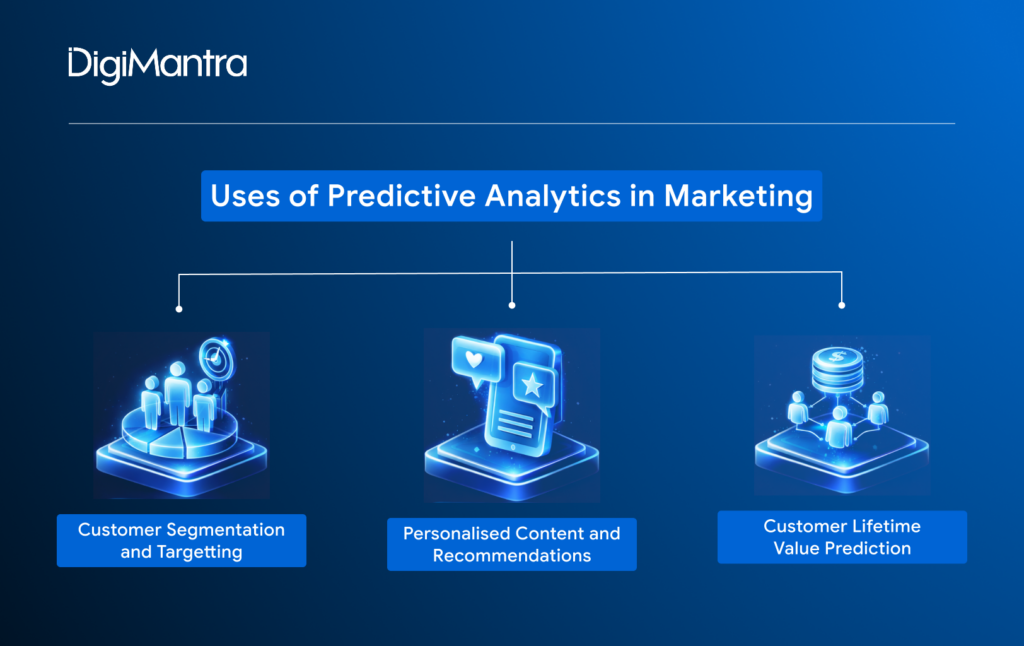
Customer Segmentation and Targeting
Traditional marketing once relied on broad demographics, casting a wide net and hoping for results. Predictive analytics changes that completely by enabling highly precise, behaviour-driven segmentation. Instead of focusing only on who customers are, it helps marketers understand what they are most likely to do next.
By analysing signals such as browsing behaviour, purchase history, engagement patterns, and interaction trends, predictive models can identify customers who are most likely to:
- Make a purchase within a specific timeframe.
- ‘Engage with’ or ‘ignore’ certain types of messaging.
- Upgrade to higher-value products or services.
- Stop engaging without timely intervention.
- Become loyal advocates for the brand.
This deeper level of insight allows businesses to deliver the right message to the right audience at the right stage of their journey, significantly improving campaign effectiveness.
Personalised Content and Recommendations
Ever noticed how some platforms seem to know exactly what you might want next? That’s predictive analytics in action, not guesswork. By studying past interactions and preferences, predictive systems can anticipate which products, offers, or content a customer is most likely to engage with.
This enables highly tailored recommendations that enhance the customer experience and increase conversion potential. As personalisation technologies advance, dynamic content can now adjust in real time based on evolving customer behaviour, ensuring that every interaction remains relevant and timely.
Customer Lifetime Value Prediction
Every customer contributes differently to a business’s long-term success. Predictive analytics helps marketers estimate the future value of each customer, enabling smarter allocation of time, budget, and resources.
By examining factors such as purchase frequency, spending patterns, product preferences, and engagement levels, predictive models can forecast:
- Future buying behaviour.
- Expected duration of the customer relationship.
- Potential for upselling or cross-selling.
- Likelihood of long-term loyalty.
- Overall projected revenue contribution.
With these insights, marketers can focus high-impact strategies on customers who offer the greatest growth potential, while also designing targeted efforts to nurture and retain other valuable segments.
7 Powerful Ways Predictive Analytics Elevates Marketing Performance
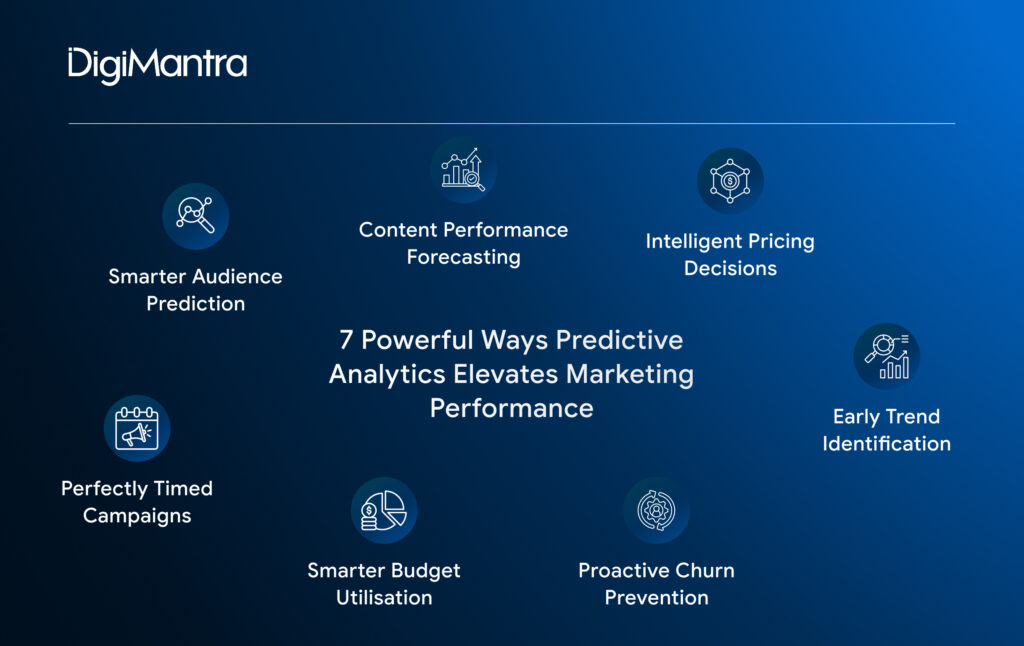
1. Smarter Audience Prediction
Predictive analytics makes audience segmentation far more precise than traditional methods. By studying past customer behaviour, AI-powered marketing analytics tools can identify groups based on their likelihood to take specific actions.
For example, marketers can quickly find customers who may be close to unsubscribing or those most likely to make a purchase within a defined timeframe. This allows teams to focus their efforts on high-impact opportunities instead of relying on broad targeting.
2. Perfectly Timed Campaigns
In marketing, timing can make or break results. Modern marketing no longer waits for results to learn from them. With AI-powered pattern recognition, performance is shaped before campaigns even go live.
Predictive analytics in marketing helps determine not only who to target but also the best moment to reach them. By analysing engagement patterns and customer activity trends, it can identify when customers are most likely to respond, whether that means sending emails during peak activity periods or launching campaigns during favourable market conditions. The outcome is stronger engagement and higher conversion potential.
3. Smarter Budget Utilisation
With limited marketing budgets, every decision matters. Predictive analytics helps marketers estimate how campaigns and channels will perform before they even launch. It also enables real-time adjustments, allowing budgets to shift toward the strategies delivering the strongest returns. This ensures resources are invested where they generate the greatest impact.
4. Proactive Churn Prevention
Retaining current customers is usually more economical than bringing in new ones. Predictive models can detect early warning signs of disengagement by observing changes in customer attributes, such as declining interactions, reduced usage, or negative feedback. These insights allow businesses to take timely action, such as personalised offers or targeted re-engagement campaigns, to retain valuable customers before they leave.
5. Early Trend Identification
Market shifts rarely happen overnight. Predictive analytics helps brands recognise emerging trends at an early stage by evaluating data from search patterns, social conversations, and evolving customer interests. This forward visibility allows marketers to adapt quickly, create relevant content, and position their offerings ahead of competitors.
6. Intelligent Pricing Decisions
Setting the right price can be complex, especially in competitive markets. Predictive analytics in marketing supports smarter pricing strategies by forecasting how demand might respond to different price points across customer segments. It can also anticipate potential competitive reactions, helping businesses balance profitability with customer perception and market positioning.
7. Content Performance Forecasting
Content marketing becomes far more effective when guided by data rather than intuition alone. Predictive systems assess past performance metrics, such as topics, formats, timing, and audience response, to estimate which types of content are most likely to succeed. This enables marketing teams to focus their creative efforts on strategies that drive stronger engagement, conversions, and long-term value.
By turning data into foresight, predictive analytics empowers marketers to make smarter decisions, reduce uncertainty, and consistently deliver higher-performing personalised marketing campaigns.
Bonus Tip for Business Owners, Startups & Marketers
Business Owners: Design growth before you demand it. Let intelligent insights guide decisions instead of relying only on instinct.
Startups: Use future signals to reduce risk early. Speed and precision matter more than size in today’s market.
Marketers: Your role has evolved from analysing results to anticipating intent, turning foresight into meaningful customer experiences.
Building Future-Ready Marketing with Predictive Analytics
Predictive analytics has moved beyond being a passing trend; it is now a core capability for marketing teams navigating the realities of 2026. As expectations for measurable results continue to rise and customer actions become more complex to interpret through traditional metrics alone, the ability to anticipate outcomes has become a strategic necessity.
When used effectively, predictive analytics strengthens every phase of the marketing journey. It supports smarter prioritisation, enables more relevant experiences, improves performance, and drives marketing ROI optimisation.
The true advantage, however, doesn’t come from prediction alone. Its real value emerges when insights are translated into timely, confident decisions that guide meaningful action.
Organisations that treat predictive analytics as a long-term investment, supported by strong data foundations, clear decision-making processes, and collaboration across teams, will be better equipped to adapt, compete, and scale. In a fast-changing business landscape, predictive insight gives marketing leaders the clarity needed to move forward with confidence rather than uncertainty.
Consult with DigiMantra experts to turn your data into predictive intelligence that accelerates growth, sharpens decisions, and maximises marketing ROI.

AI-FIRST ENGINEERING FOR MODERN BUSINESSES
Designed for performance. Powered by innovation.
 Product Development
- Custom Software
 Mobile & Web
- AI & Automation
- Cloud Management
- Intelligent Systems