

Still depending on cookies to understand your audience? That era is rapidly fading. Third-party cookies are losing relevance, and marketers who fail to evolve risk falling behind.
The shift has been building for years. In 2017, Apple took the first bold step by restricting third-party cookies in its browser ecosystem. Mozilla followed in 2019 with similar privacy-focused changes. To support this shift, Google launched a feature called Tracking Protection, which once activated, automatically prevents websites from accessing third-party cookies.
But this isn’t just another industry shake-up. It’s a turning point. For marketers, it signals a powerful opportunity to reinvent how customer insights are gathered and activated. This is where cookieless tracking takes centre stage, enabling brands to deliver personalised, data-driven experiences without relying on third-party cookies.
“Over the years, I’ve seen marketing evolve from creativity to data obsession. But in 2026, the balance will return. Technology will support marketing, but trust will lead it. Brands that fail to respect this shift will struggle to build long-term relationships in a cookieless world,”
says Poonam Senwal, Digital Marketing Manager at DigiMantra. With over 11 years of experience in digital strategy and brand growth, she focuses on building privacy-first, customer-centric marketing models for the future.
This guide explores why cookieless data tracking matters, how it actually works, and the practical strategies, technologies, and approaches marketers need to thrive in a privacy-first future of digital advertising.
What are Cookies?

Cookies are tiny data files that websites place on a user’s device during a visit. They store details about how someone interacts with a site, such as login information, preferences, and browsing activity, so the website can recognise the user on future visits. By doing this, cookies help create smoother navigation, remember settings, and enable more personalised digital experiences.
Although cookies are valuable for improving usability and convenience, they also raise important concerns, especially when it comes to data privacy and how user information is collected and shared.
Pros and Cons of Cookies
| Why Cookies Are Beneficial | Why Cookies Raise Concerns |
| Personalised Experiences: Cookies store user preferences such as language, settings, and saved items, making website interactions smoother and more relevant. | Privacy Issues: Some cookies track user activity across multiple websites, leading to concerns about how much personal data is collected and whether users have given clear consent. |
| Session Continuity: They allow users to stay signed in while browsing, reducing the need for repeated logins and improving convenience. | Third-Party Tracking: Advertisers often use third-party cookies to build detailed user profiles for targeted advertising, which many users find intrusive. |
| Analytics & Output Optimisation: Cookies help businesses understand user behaviour, like page visits, engagement, and conversions, so they can improve website performance. | Security Vulnerabilities: Since cookies may store session data, they can become targets for cyberattacks if not properly protected. |
| Relevant Advertising: Marketers use cookies to show ads aligned with user interests, helping reduce irrelevant promotions and improve campaign effectiveness. | Risk of Data Misuse: Poor handling of cookie data can lead to unauthorised sharing, privacy violations, or misuse of personal information. |
Cookies play a key role in creating smooth, personalised digital experiences, but they also bring serious challenges related to privacy, data security, and user consent. For businesses moving toward cookieless approaches, it’s important to understand both their advantages and limitations to maintain strong user experiences.
With that context in mind, let’s explore how marketers can still capture valuable insights and optimise performance, without relying on cookies.
What is Cookieless Tracking and Its Working Mechanism?

Cookieless tracking is a modern approach to collecting and analysing user data without depending on third-party cookies. As privacy expectations rise and browsers continue to limit traditional tracking methods, it enables marketers to gain valuable insights while placing greater emphasis on user trust and data protection.
Unlike cookie-based tracking, which relies on small data files stored on a user’s device to monitor activity, cookieless methods operate without storing such identifiers. This makes them more privacy-friendly, compliant with evolving regulations, and better aligned with today’s security standards.
A successful marketing in 2026 will depend on three principles: Trust, Context, and Connection.
“I truly believe in the three Principles of Cookieless Growth:
a. Trust before Targeting: Customers engage when they feel safe, not tracked.
b. Context before Data: Understanding intent through content and behaviour on owned platforms.
c. Connection before Conversion: Building relationships before selling”, explains Poonam Senwal.
Below are some key advantages that make cookieless tracking an essential strategy for the future of digital marketing.
Advantages of Cookieless Tracking
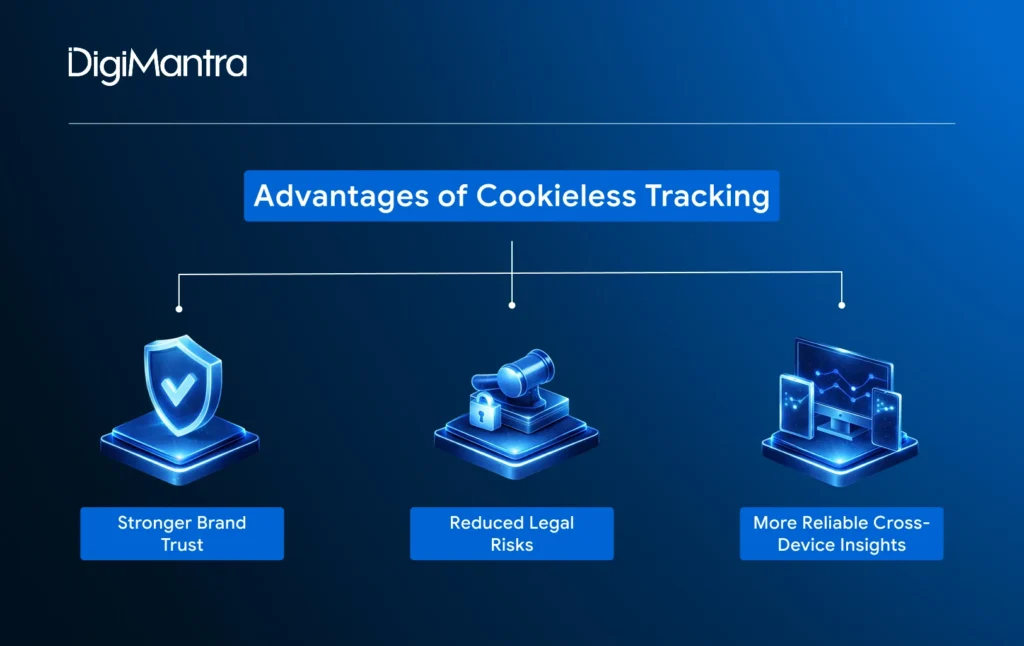
Explore how marketing without tracking empowers brands to gain actionable insights, build customer trust, and deliver personalised experiences while fully respecting user privacy.
Stronger Brand Trust
Adopting cookieless data tracking shows a clear commitment to protecting user privacy. As people become more aware of how their data is used, businesses that prioritise transparency and privacy-friendly marketing strategies are more likely to earn customer confidence, loyalty, and a positive brand image.
Reduced Legal Risks
Collecting data without proper consent can result in serious penalties under regulations like GDPR and CCPA. By focusing on first-party data and clear permission-based tracking, businesses can stay compliant and avoid costly legal consequences.
More Reliable Cross-Device Insights
Traditional third-party cookies often fail to track users accurately across different devices. Cookieless approaches, such as first-party data collection strategies and server-side tracking, provide more consistent and dependable insights as users move between phones, tablets, and desktops.
In essence, tracking or marketing without cookies not only strengthens privacy compliance and customer trust but also delivers more accurate, future-ready data.
Now that we’ve explored the benefits, let’s look at how cookieless tracking actually works behind the scenes.
Exploring Cookieless Tracking Mechanisms
What’s different today is not just regulation, but awareness. Customers ask questions about how their data is used. They read privacy policies. They expect control. This change in behavior is the real reason cookieless marketing is inevitable.
To adapt to this change, cookieless tracking relies on alternative ways to collect user insights without storing cookies on a person’s device. Instead, data is often captured directly through servers, allowing businesses to monitor user behaviour more securely while avoiding the limitations of blocked or deleted cookies.
It can also involve methods like device-based identification, which analyses technical attributes of a user’s device to create a unique, non-cookie identifier. Alongside this, first-party data, which is gathered directly from user interactions with websites or apps, plays a central role, enabling privacy-friendly personalisation and smarter marketing decisions.
As privacy rules continue to evolve, tracking users without cookies gives businesses a reliable path to gain meaningful insights while respecting user trust and meeting modern compliance standards.
Ready to go further in cookieless marketing? Let’s explore the most effective strategies for collecting data, without relying on cookies at all.
5 Effective Cookieless Data Collection Strategies
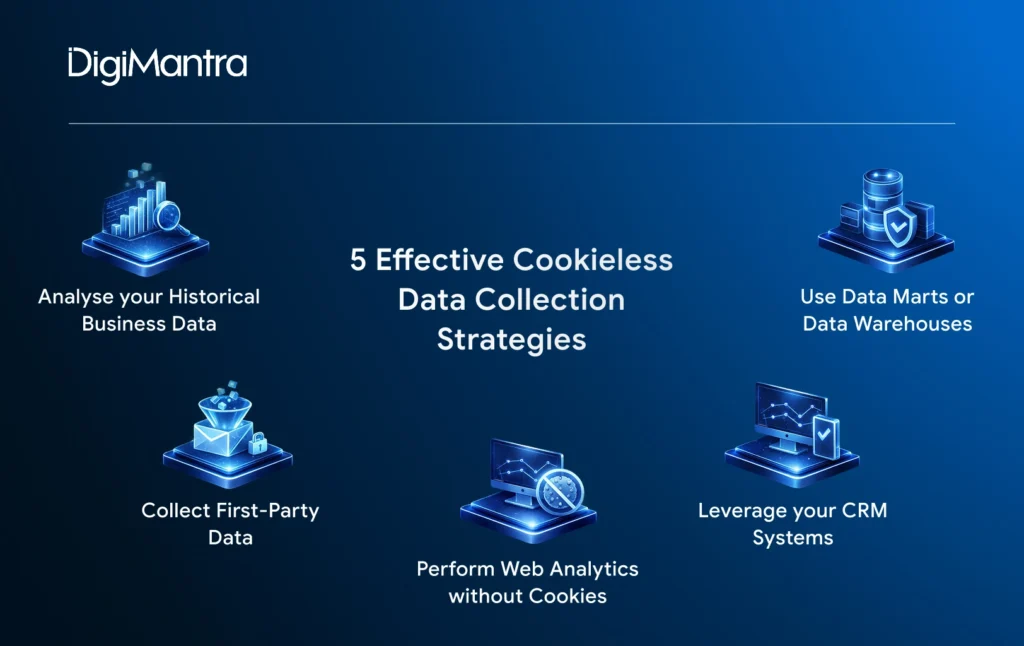
As third-party cookies fade out, businesses must shift toward privacy-first ways of gathering insights. Cookieless marketing strategies focus on consent-based, reliable data sources that help brands stay compliant while still understanding their audience. Here are five practical approaches:
Analyse Your Historical Business Data
From day one, every business generates valuable information. While marketing metrics often get the most attention, past operational data, like purchase history, customer locations, and service interactions, can offer equally powerful insights.
For instance, companies can anonymise customer email data by retaining only domain details to identify patterns and build ideal business profiles. This makes it possible to discover and target similar organisations within the same industries or regions, without exposing personal information.
By tapping into historical data responsibly, businesses can uncover new opportunities, strengthen lead generation, and stay fully aligned with evolving privacy standards.
First-Party Data Collection
First-party data refers to information gathered directly from users through their interactions with your website, app, or digital platforms. Since customers willingly share this data, it is highly reliable, privacy-safe, and aligned with modern regulations.
For example, interactive quizzes can both engage visitors and capture valuable preference insights, while surveys and feedback forms help businesses understand customer needs, expectations, and behavior more clearly. These direct touchpoints make personalization more accurate and meaningful.
Web Analytics Without Cookies
Modern analytics tools can still deliver powerful insights without relying on cookies. Solutions like Google Analytics 4 use privacy-focused methods, such as server-side tracking and aggregated data modelling, to monitor performance while protecting user information.
With these tools, marketers can understand visitor behaviour, map user journeys, and improve conversion strategies without intrusive tracking. The key is choosing analytics solutions that balance accuracy, ease of implementation, and strong privacy standards.
Leverage Your CRM Systems
Customer Relationship Management (CRM) platforms are a powerful source of first-party data. Information collected through loyalty programs, repeat purchases, and customer interactions is shared directly by users, making it both reliable and privacy-compliant.
A well-managed CRM can reveal valuable insights, such as buying patterns, preferences, and engagement history, allowing businesses to deliver personalised recommendations without depending on cookies.
Use Data Marts or Data Warehouses
As businesses gather increasing amounts of first-party data, secure and organised storage becomes critical. Data marts and data warehouses help centralise information in one system, making it easier to manage, analyse, and turn raw data into meaningful insights.
This approach not only improves data reliability but also prevents fragmentation, helping businesses make smarter, well-informed decisions based on complete and unified insights.
What Are Cookieless Tracking Methods?
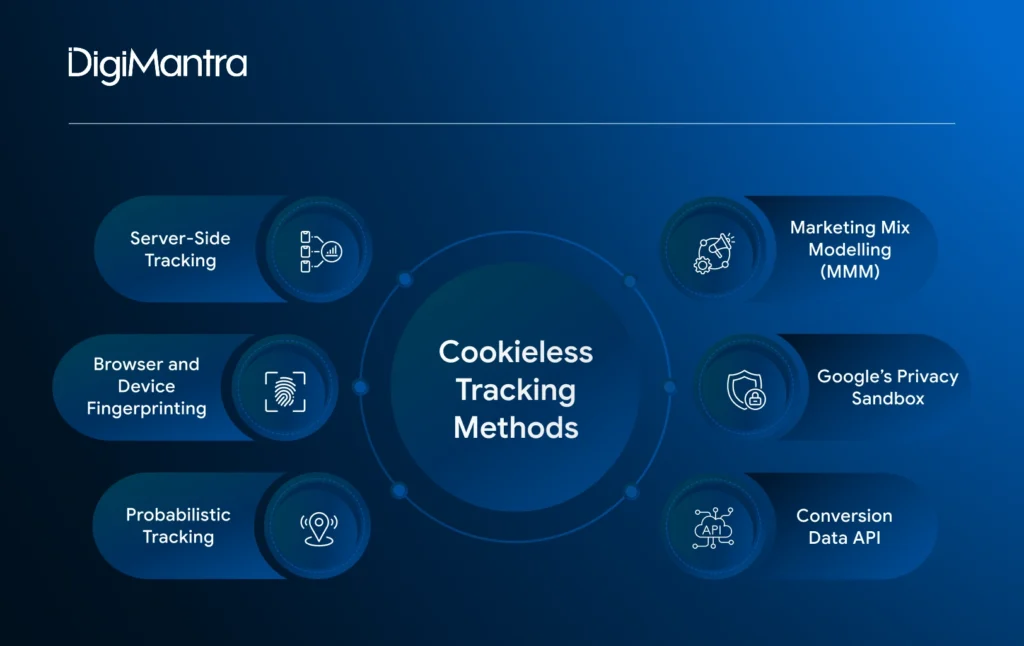
As digital marketing shifts away from cookie-based tracking, businesses must adopt new ways to understand user behavior without compromising privacy. Cookieless tracking methods provide modern, regulation-friendly alternatives that help marketers continue gathering meaningful insights responsibly, especially within Digital Marketing Services.
Below, we’ll explore six key approaches, along with how they work, their benefits, and the challenges businesses should consider.
1. Server-Side Tracking
Server-side tracking collects and processes user data directly on a company’s server instead of storing it in a user’s browser. By shifting tracking away from client-side cookies, this method improves data accuracy, strengthens privacy, and avoids disruptions from ad blockers or cookie restrictions. It ensures businesses can still capture meaningful insights, even when traditional tracking methods fail.
Pros
- Stronger Privacy Compliance:
Because data is handled securely on the server, there’s a lower risk of privacy breaches, making it better aligned with regulations like GDPR and CCPA. - Unaffected by Browser Restrictions:
Unlike cookie-based tracking, it continues to work even when browsers block cookies or enable strict privacy settings. - Higher Data Accuracy:
Direct server processing reduces data loss and provides more reliable insights from real user interactions.
Cons
- Limited to Single Domains:
Server-side tracking typically monitors activity only within one website or ecosystem, making cross-site tracking difficult. - Complex Implementation:
Setting up and maintaining this infrastructure often requires technical expertise, time, and resources.
Overall, server-side tracking is a powerful privacy-first alternative to traditional methods.
2. Browser and Device Fingerprinting
Browser and device fingerprinting identifies users by analysing unique technical details, such as screen size, browser type, IP address, system settings, and installed fonts. Instead of relying on cookies, this method creates a distinct digital “signature” that can recognise users across sessions and even different websites.
Pros
- Highly Precise Identification:
By combining multiple device and browser attributes, fingerprinting can generate a unique profile, enabling accurate user recognition. - Persistent Cross-Session Tracking:
Although it doesn’t depend on stored cookies, it can continue identifying users across multiple visits and browsing sessions.
Cons
- Significant Privacy Concerns:
Because it collects detailed device-level information, fingerprinting can feel intrusive and may conflict with strict privacy regulations. - Limited Transparency & Control:
Users often aren’t aware when fingerprinting occurs, making it harder to regulate and raise ethical and compliance challenges.
While fingerprinting offers strong tracking capabilities, businesses must carefully weigh its effectiveness against privacy expectations and evolving regulatory standards.
3. Probabilistic Tracking
Probabilistic tracking relies on statistical analysis and machine learning to interpret user behaviour based on patterns and signals. Instead of identifying individuals directly, it evaluates multiple touchpoints, such as device type, location, and browsing activity, to estimate the likelihood of actions like clicks, purchases, or conversions.
Pros
- No Direct User Identification Required:
It enables marketers to understand trends and attribute outcomes without tracking personally identifiable information. - Well-Suited for a Cookieless Future:
By combining data from multiple sources, probabilistic methods help businesses continue measuring performance even as traditional cookies disappear.
Cons
- Lower Accuracy Compared to Direct Tracking:
Because results are based on probabilities rather than confirmed identities, insights may not always be precise. - Dependent on Data Quality & Models:
If the underlying data or algorithms are flawed, predictions can lead to incorrect conclusions.
In summary, probabilistic tracking offers a privacy-friendly way to gain directional insights, making it a valuable tool in modern, cookieless marketing strategies.
4. Marketing Mix Modelling (MMM)
Marketing Mix Modelling is a data-driven approach that uses statistical analysis to evaluate how different marketing activities influence business results. By examining historical performance along with external factors, such as seasonality, market trends, and economic conditions, it helps organisations understand which channels truly drive impact.
“Marketing Mix Modelling represents a mindset shift in how brands measure success. For years, marketers have depended on user-level tracking to justify performance. In the cookieless era, MMM allows brands to focus on business growth indicators such as sales, loyalty, and long-term value, without compromising customer privacy”, highlights Poonam Senwal.
Pros
- Holistic Performance Insights:
MMM measures the effectiveness of both online and offline marketing efforts, giving businesses a complete view of what’s working. - Supports Long-Term Optimisation:
It identifies trends over time, helping companies allocate budgets more strategically and improve overall marketing ROI.
Cons
- Resource-Intensive Process:
Building accurate models requires large datasets, advanced analytics, and significant time investment. - Lacks Individual-Level Detail:
While it’s excellent for big-picture insights, MMM doesn’t provide granular visibility into specific user behaviour.
Overall, Marketing Mix Modelling is a powerful tool for strategic decision-making, especially for businesses focused on long-term marketing performance rather than individual tracking.
5. Google’s Privacy Sandbox
Google’s Privacy Sandbox is a collection of privacy-focused tools designed to help marketers deliver relevant advertising without relying on third-party cookies. Instead of tracking individuals across websites, it uses secure APIs to analyse user interests in a more aggregated and privacy-conscious way.
Pros
- Built for Privacy:
It minimises cross-site tracking and prioritises user data protection, aligning with evolving privacy expectations. - Potential Industry Benchmark:
As a major initiative from Google, it has the potential to shape future standards for advertising in a cookieless ecosystem. - Interest-Based Targeting:
Marketers can still deliver relevant ads by focusing on user interest groups rather than personal identities.
Cons
- Slow Adoption Phase:
The framework is still rolling out gradually, which makes it challenging for businesses to fully implement and evaluate its effectiveness. - Unclear Transition Timeline:
Ongoing delays in phasing out third-party cookies have created uncertainty around when and how widely these tools will be adopted.
Taken together, the Privacy Sandbox represents a major step toward balancing effective advertising with stronger user privacy in the evolving digital landscape.
6. Conversions API for Sending Conversion Data to Platforms
The Conversions API (CAPI) enables businesses to share conversion data directly with advertising platforms, without relying on third-party cookies. Instead of tracking through browsers, data is sent securely from a company’s server to platforms like Meta, TikTok, and LinkedIn, ensuring more reliable and privacy-conscious measurement.
Pros
- Greater Tracking Accuracy:
By transmitting data server-to-server, CAPI reduces data loss caused by browser restrictions, leading to more precise conversion attribution. - Seamless Platform Integration:
It works smoothly with major ad platforms, allowing businesses to continue using their existing marketing tools and workflows.
Cons
- Requires Technical Setup:
Implementing CAPI involves backend integration, which may demand technical expertise and development resources. - Focused on Conversions Only:
While effective for tracking results like purchases or sign-ups, it doesn’t provide a complete picture of broader user behaviour.
As a whole, the Conversions API is a powerful solution for improving measurement accuracy in a cookieless environment, especially for performance-driven marketing.
Conclusion
The cookieless era proves one thing: growth no longer depends on how much data you collect, but on how deeply you understand your audience without invading their privacy. Marketing in 2026 will be built on consent, context, and connection.
As digital advertising moves toward a privacy-first future, marketers must evolve their strategies to remain effective in a cookieless landscape. While the decline of third-party cookies brings new challenges, it also creates powerful opportunities for businesses to build stronger, more direct relationships with their audiences through first-party data.
Adopting modern alternatives to third-party cookies, such as Google’s Privacy Sandbox, server-side tracking, and advanced audience segmentation, will be essential for delivering personalised experiences while safeguarding user privacy. The future of marketing is not just data-driven but also trust-driven.
DigiMantra helps businesses navigate this cookieless marketing shift with solutions designed to collect, manage, and activate first-party data effectively. With the right tools and strategy, brands can run tailored, privacy-compliant campaigns, without relying on cookies, and confidently future-proof their marketing performance.
Book a consultation with our experts to discover how the right solutions can help you adapt to the cookieless era and unlock stronger results from your first-party data.

AI-FIRST ENGINEERING FOR MODERN BUSINESSES
Designed for performance. Powered by innovation.
 Product Development
- Custom Software
 Mobile & Web
- AI & Automation
- Cloud Management
- Intelligent Systems