

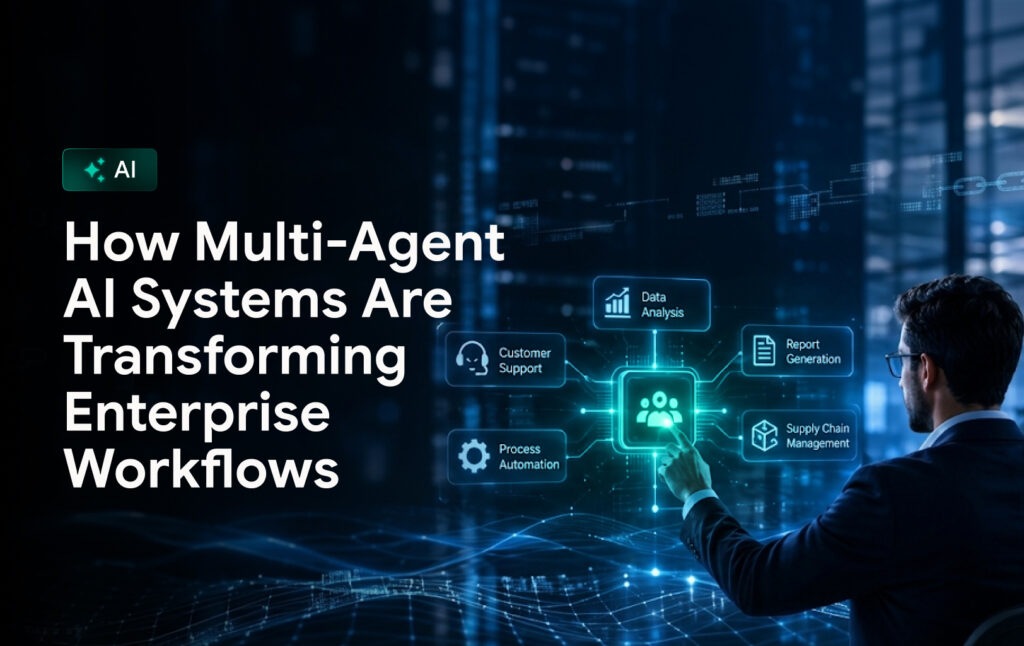
Artificial intelligence helps businesses to improve their efficiency, make better decisions and enhance the quality of service by automating routine tasks. However, as business processes become more complex, individual AI systems may not be enough to manage every task effectively.
With multi-agent artificial intelligence systems, businesses can achieve their objectives using a network of specialised AI agents. Depending on the task, each agent performs a specific task such as data analysis, claim management or report writing among other functions.
Multi-agent AI systems have revolutionised the working process of companies by reducing their dependency on human resources, promoting interdepartmental collaboration and streamlining the process of decision making.
What Are Multi-Agent AI Systems?
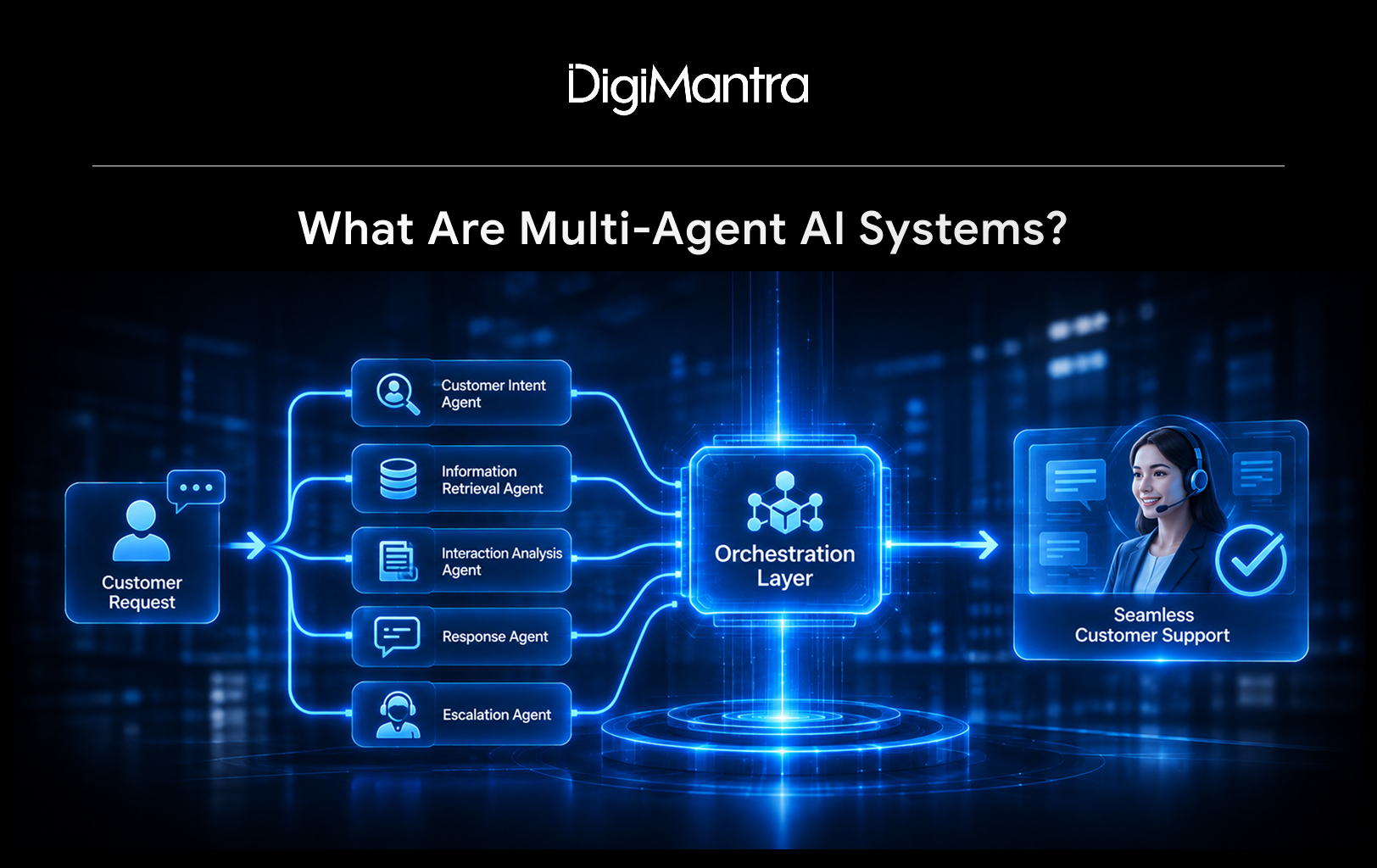
Multi-agent AI systems comprise independent agents, each pursuing a common goal and performs a specific function, while the system’s orchestration layer oversees managing the overall functioning of the agents.
Unlike single-agent AI systems designed to handle individual tasks, multi-agent AI systems break down complex processes into smaller tasks and assign them to different agents.
For example, multiple AI agents can work together in a customer service process to:
- Identify customer needs.
- Retrieve relevant information from company databases.
- Review customer experience and previous interactions.
- Formulate responses or suggestions.
- Escalate complex issues to human representatives.
Together, these agents streamline end-to-end workflows, freeing staff to focus on tasks requiring human judgement.
Why Are Multi-Agent AI Systems Important for Enterprises?
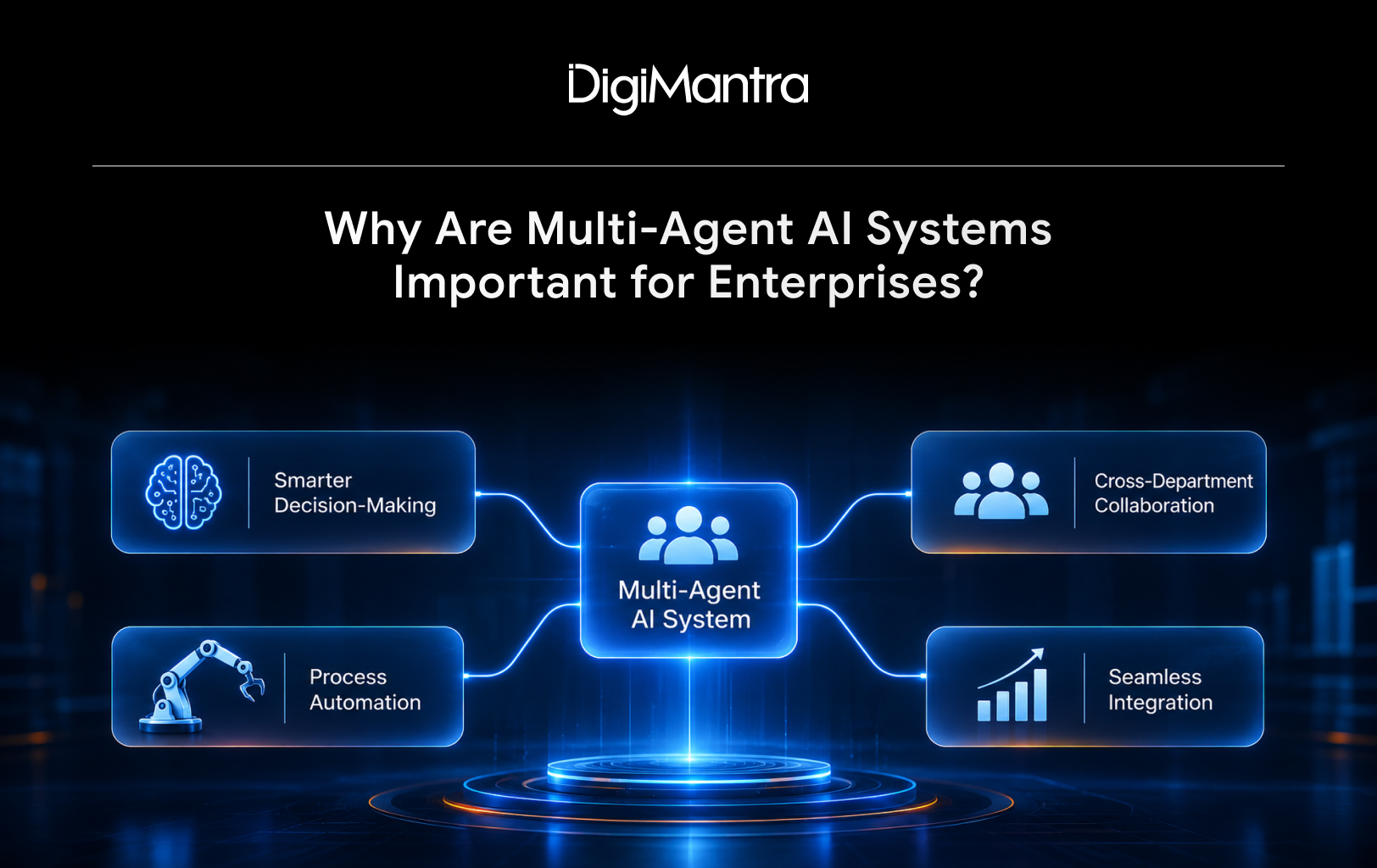
Modern businesses manage a complex network of separate sectors, programs, and operational procedures. Depending on human involvement in coordinating various activities typically results in severe delays, higher operating costs, and limited collaboration.
Traditional automation tools usually follow strict rules, while individual AI assistants are used to do a single job. On the other hand, multi-agent AI architecture provides a more flexible structure by allowing several agents to work together on different stages of a business process.
Key Reasons Enterprises Are Adopting Multi-Agent AI:
- With the implementation of AI agents, improved operational efficiency is achieved, as various agents perform different activities simultaneously. Thus, reducing the time required for completing complex processes.
- AI agents have an important role in decision-making as they can combine data collected from the various sources and transform it into valuable insights which can help to make strategic decisions.
- AI agents excel at decision-making tasks as they can analyse data from different sources and turning that data into valuable information or actionable insights.
- By utilising data from a plethora of sources, the incorporation of AI agents makes decision-making easier, as they translate this information into valuable insights.
- The application of robotics assists in the streamlining process, causing jobs that demand the conducting of repetitive tasks to disappear, thanks to the switch of workers to jobs demanding the utilisation of critical thinking.
- Cross -departmental collaboration enables agents to facilitate the seamless exchange of pertinent data across various divisions, thereby bridging the gap between previously disjointed business process.
How Do Multi-Agent AI Systems Transform Enterprise Workflows?
Multi-agent artificial intelligence solutions enhance corporate processes by breaking down complicated activities into different pieces and assigning the tasks to specific agents. The orchestration solution manages these processes and assures effective information distribution between the agents in the established order. The subsequent text provides a few essential issues related to how these solutions change the shape of the business world:
1. Automating Complex Business Processes
A variety of work processes and workflows in organisations include several complicated steps, approvals, and teamwork across different departments. In this case, a multi-agent AI system is a perfect solution, which makes it possible to manage simultaneous operation of these processes by automating distinct stages of the workflow.
For example, in the process of invoice processing, one agent extracts data needed from the invoice, and the second agent compares it to the information from the purchase orders, while the third agent is responsible for either discovering mismatches or preparing the document for approval.
As a result, the company can reduce administrative tasks that are duplicated.
2. Improving Data Analysis and Business Intelligence
Businesses collect large amounts of data from customer interactions, financial transactions, application usage and internal operations. Manually analysing this information can be time-consuming and may make it difficult to identify important patterns.
Multi-agent systems utilise a technique known as partitioning and specialisation in which tasks such as data-acquisition become practices among specific models. For example, data acquisition is one function fulfilled by one type of agent, while another type of agent does the task of recognising patterns.
Thus, the entire approach may help businesses recognise patterns within their business operations and challenges they face in doing so and make better decisions.
3. Enhancing Customer Experience
Customer expectations continue to grow, and businesses need to provide faster and more effective support.
The use of multi-agent AI systems in customer service activities can manage distinct tasks, such as question identification, information procurement, answer production and inquiry escalation.
For instance, when a person applies an inquiry, one agent may discover the matter, another can acquire essential account data and yet another can propose sound answers. But complex or special inquiries can still be assisted to human representatives for verification.
4. Streamlining Supply Chain and Inventory Management
Supply chain operations consist of various interconnected functions such as demand forecasting. monitoring of inventories, order management and logistics assistance.
Multi-agent artificial intelligence systems may automate these processes by allowing each agent to focus on its unique task.
More specifically
- The forecasting agent reviews the previous sales and demand trends.
- The inventory agent keeps track of the stock.
- The procurement agent identifies which products need a restock.
- The logistics agent assists with the transportation planning.
The agents can facilitate the supply chain management process by communicating the necessary information with one another.
5. Supporting Software Development and IT Operations
The process of developing software consists of many phases including the analysis of requirements and coding, until testing, distribution and support of software. Multi-agent systems in artificial intelligence can facilitate the work of software developers by distributing tasks among special agents of different kinds.
For example, a requirements analysis agent can provide technical specifications for the project, the coding agent can propose code snippets, the testing agent can check everything for unsolved errors, while the documentation agent will provide documentation on the software.
This synergy can result in increased productivity of developers because of the reduction of manual work.
Key Benefits of Multi-Agent AI Systems for Businesses
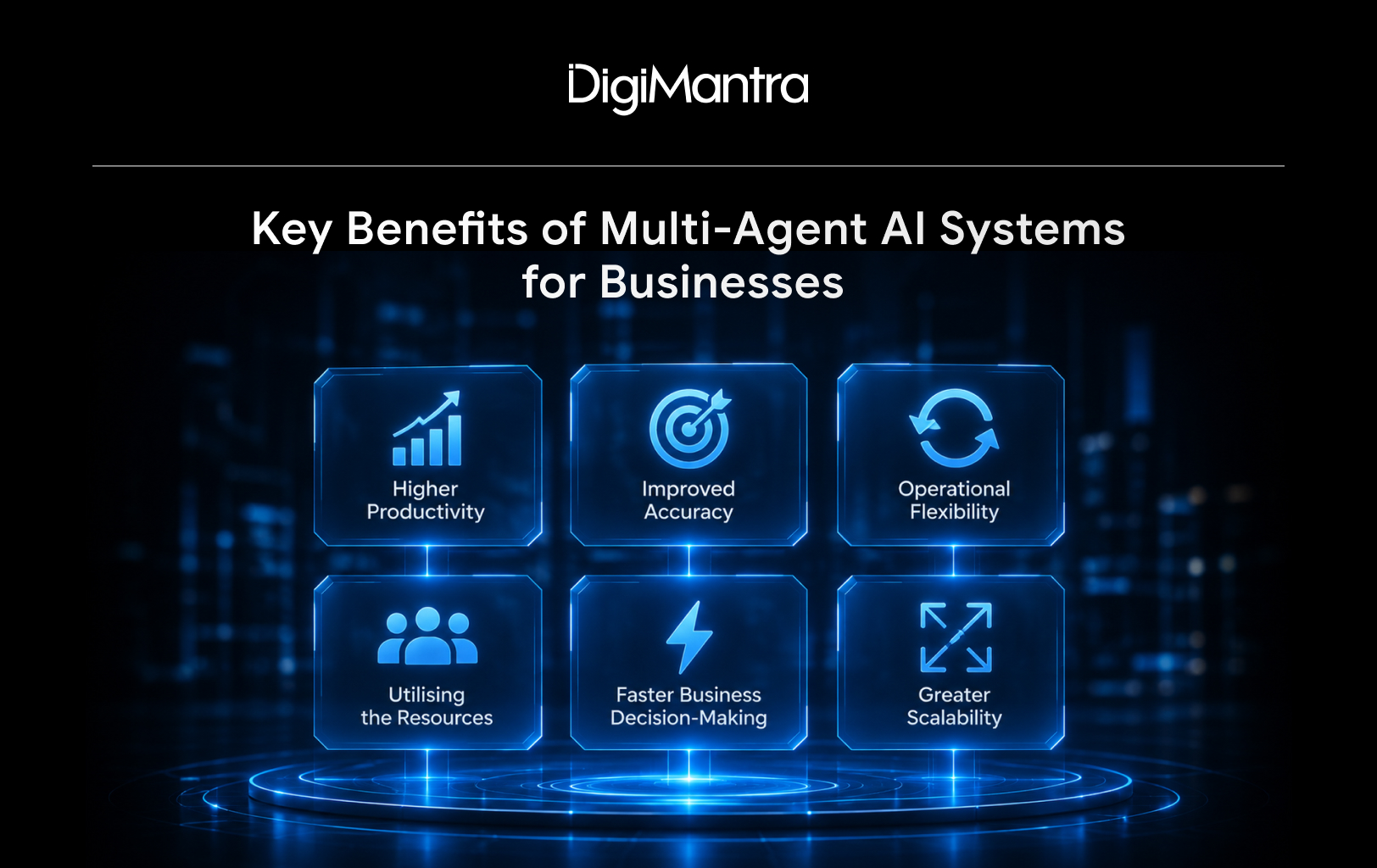
Multiple-agent systems of AI shall offer immense benefits to corporations looking to enhance their digital schemes.
These major benefits include:
Higher Productivity: Different tasks can be performed in parallel by multi-agent systems, thereby helping businesses get the work done in a less amount of time.
Improved Accuracy: Each agent focuses on a specific task, making it easier to review and validate outputs at different stages of a workflow
Operational Flexibility: The activities of a business can still be applied in a manner fitting its needs since new agents may be integrated, or even overall workflows modified quickly.
Utilising the Resources: Automation will mean the employees no longer spend time on simple repetitive administration-type work.
Faster Business Decision-Making: The agents assemble and put forward relevant information that gives a timely analysis for decision-making purposes.
Greater Scalability: Modular architectural templates within AI means these systems can ever-expanding the wave of automation across departments and functions within any business.
Challenges of Implementing Multi-Agent AI Systems
Despite the many possibilities that multi-agent AI systems present, they come with certain obstacles. Deploying many AI agents in a company’s business applications and data creates new challenges.
The following are some common challenges businesses may face:
System Integration: It is difficult technically to link different software programs with existing business applications, APIs, or databases.
Data Security and Privacy: Agents that access highly sensitive company data must use strict controls and rules of permission.
Coordination Complexity: Poor cooperation of the entities may lead to producing useless duplicates or erroneous results and missing stages of a process.
Operational Expenses: There may be expenses connected with running many AI applications and making them work together.
Reliability of Outcomes: The result of one machine may be incorrect and influence the following stages of activity if it is not verified.
Governance and Oversight: Organisations need clear rules to manage AI agent activities, access permissions, responsibilities and human oversight.
Best Practices for Implementing Multi-Agent AI in Enterprises
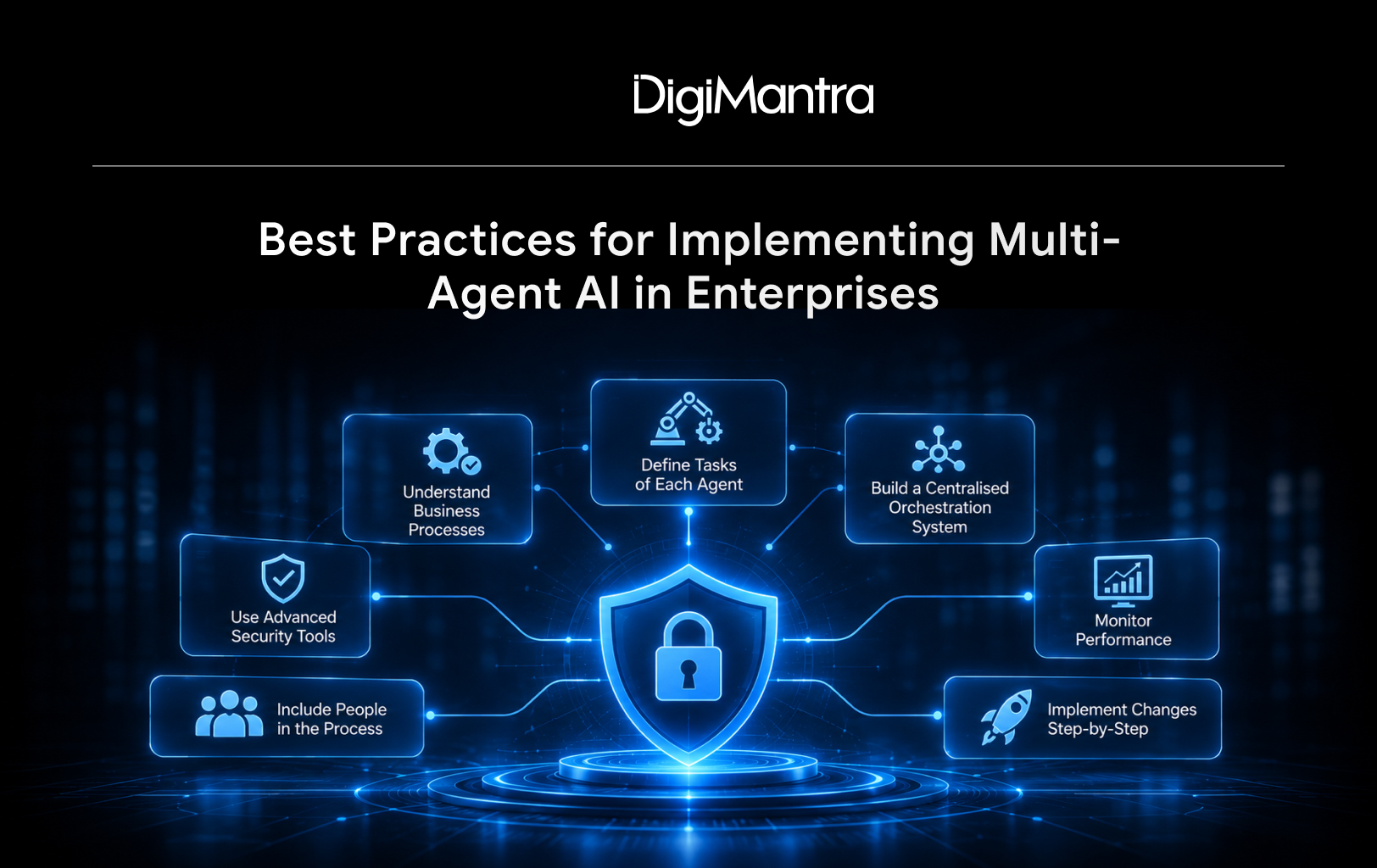
For the successful realisation, it is not enough to execute numerous AI agents; it is important for the company to work out a concrete strategy which relates its AI potential to its operating objectives.
Some important best practices include:
Understand Appropriate Business Processes: Start analysing repetitive and well-established processes according to which automation could result in the expected output.
Define Tasks of Each Agent: Every agent should have a clearly defined role to avoid overlapping tasks and confusion.
Build a Centralised Orchestration System: A centralised orchestration layer helps manage task execution, communication and coordination between agents.
Use Advanced Security Tools: It is important to apply the least privilege principle, along with data protection policies and mechanisms of authentication.
Include People in the Process: It is essential for the employees to take part in important decisions and sensitive operations.
Monitor Performance: It helps find out the effectiveness of agents, costs of the processes, time of processing, etc.
Implement Changes Step-by-Step: It starts with several small projects, followed by the expansion of successful practices into other spheres.
Conclusion
The approach that organisations take towards workflow management and automation is enhanced by multi-agent AI systems. Using advanced specialised AI agents, businesses can now be able to monitor their complex processes, improve relations and lessen the number of repeated activities.
Multi-agent AI not just assists in customer service, data analysis, supply chain process management and software creation but also provides fresh ways of working seamlessly and with scalability.
As this application of multi-agent AI becomes increasingly prevalent in companies, they must begin to focus on security, governance and system issues.
At DigiMantra, we help businesses explore and develop AI-powered digital solutions that support smarter automation, improve operational efficiency and address their evolving business needs.